Katherine Soucie
Textile Waste + Creative Reuse
From Sock Waste to Systems Change
Upcycling frameworks, obsolete machinery, and new pathways for textile futures
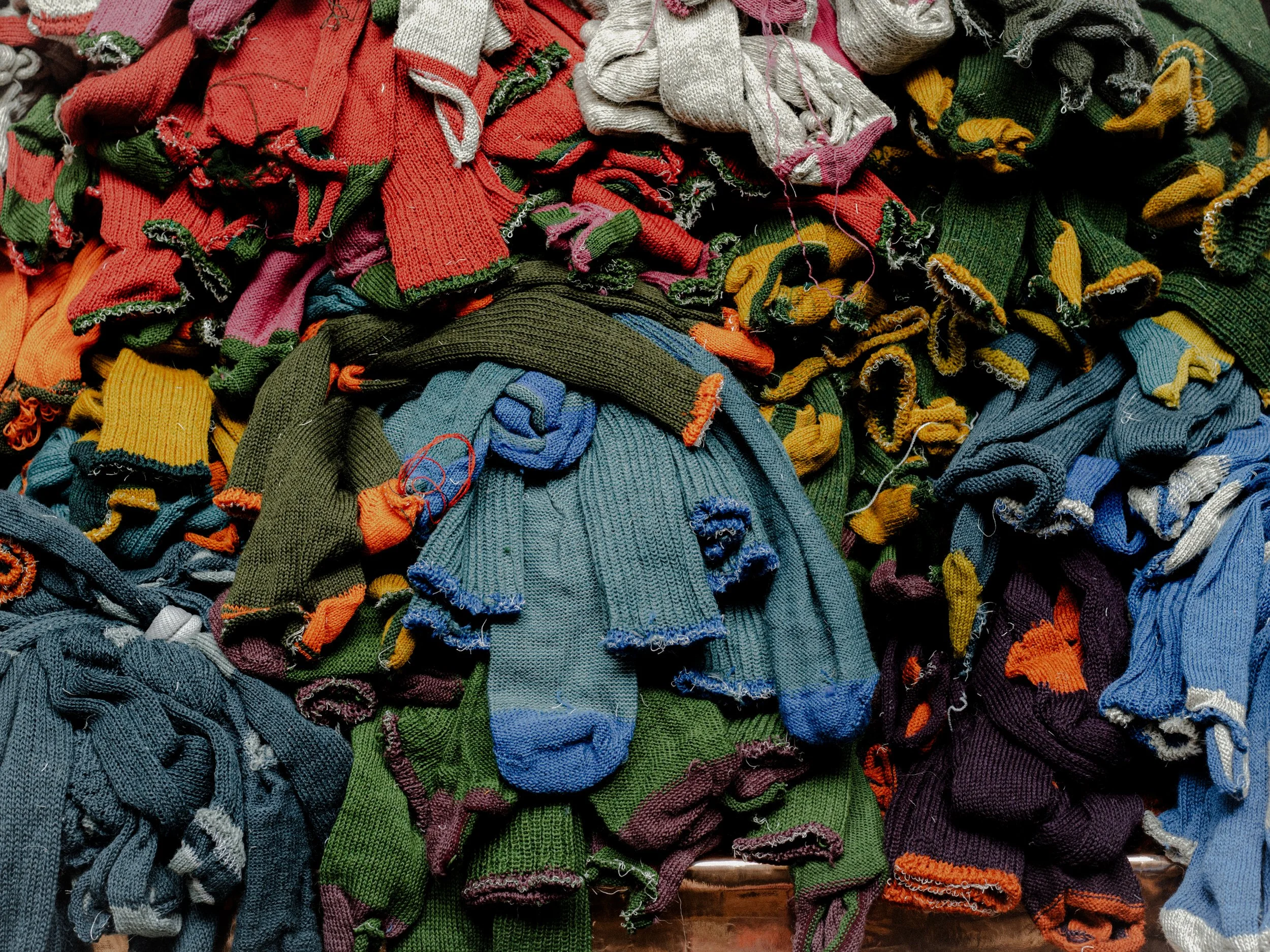
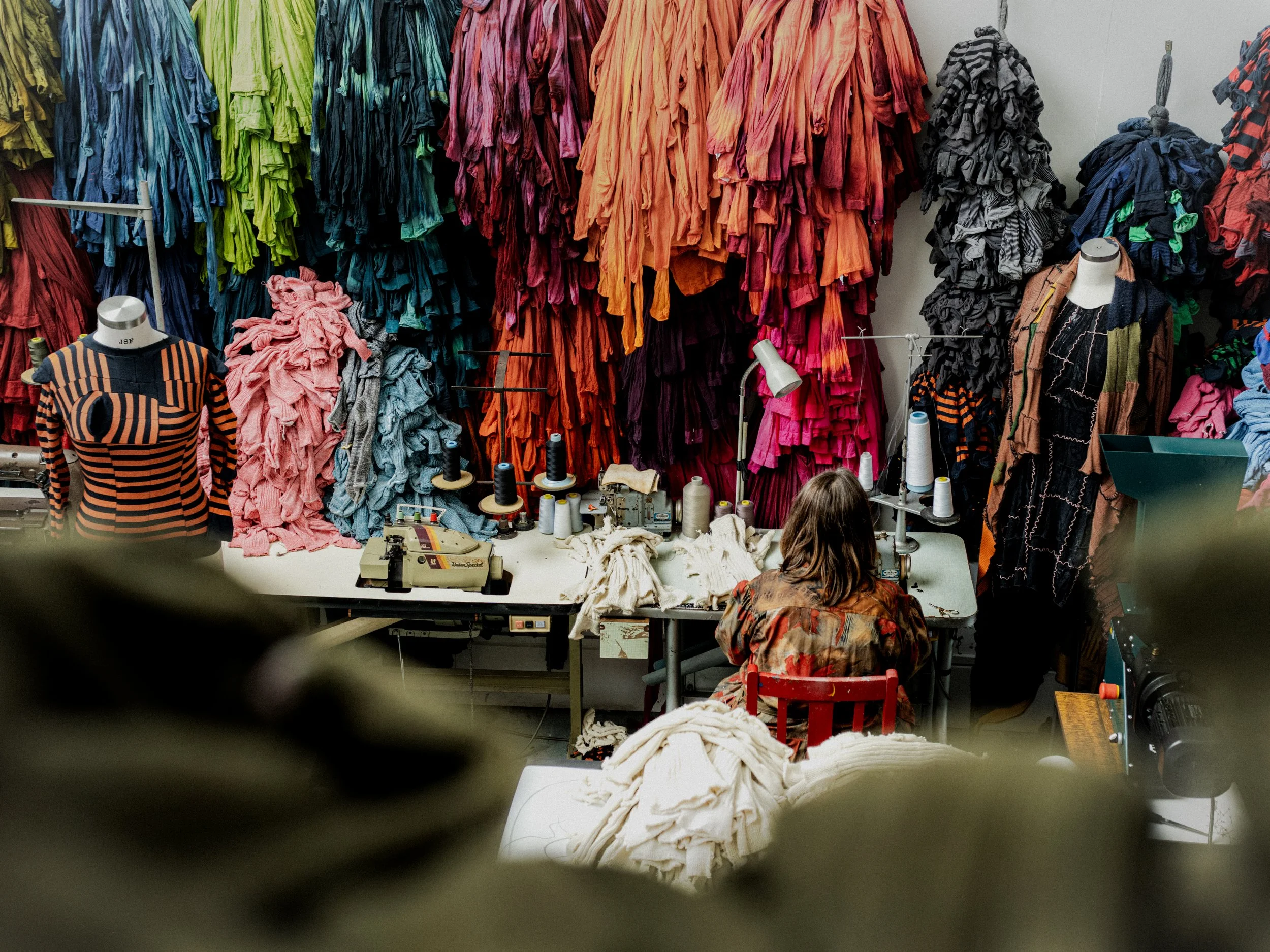
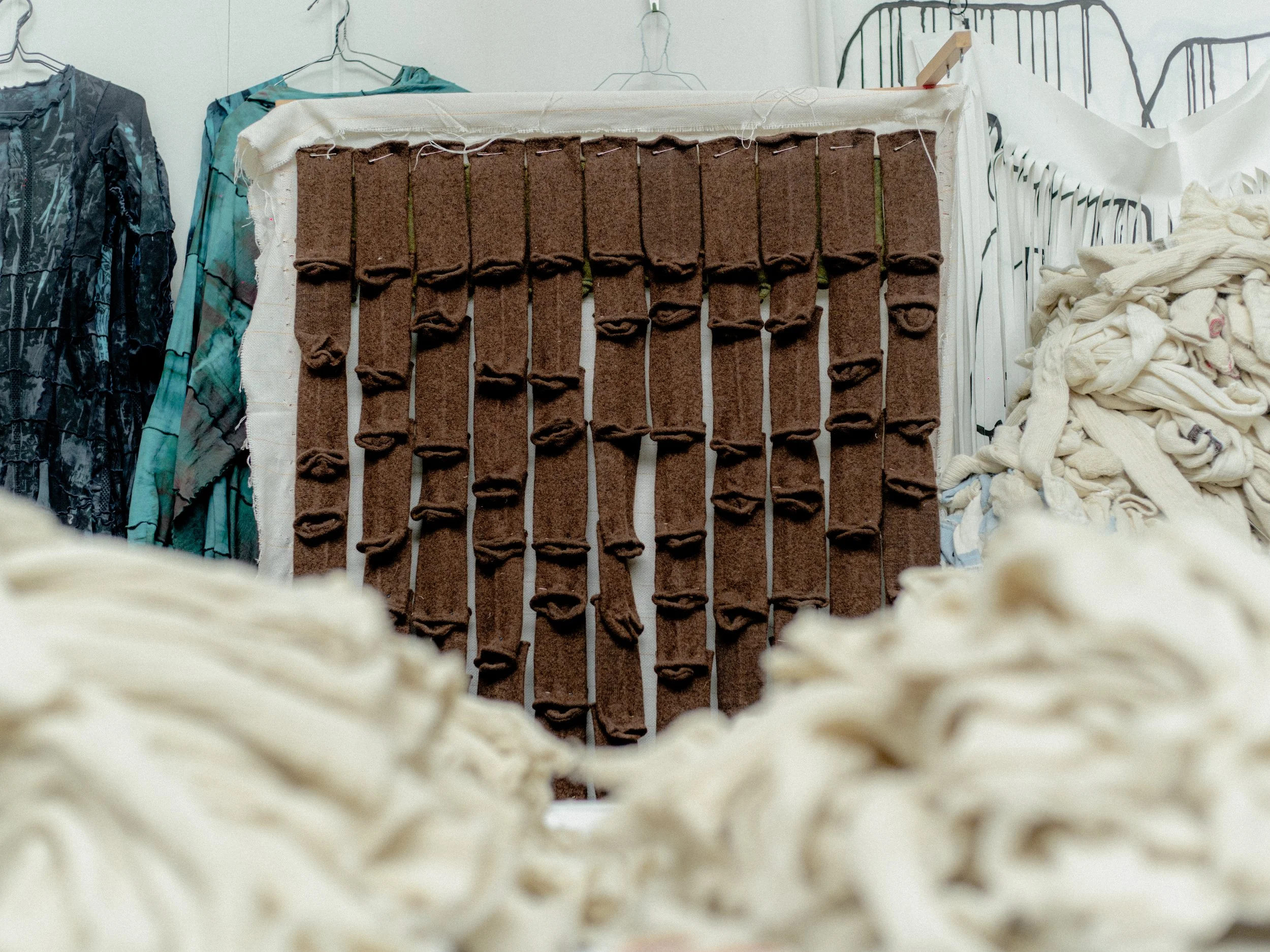
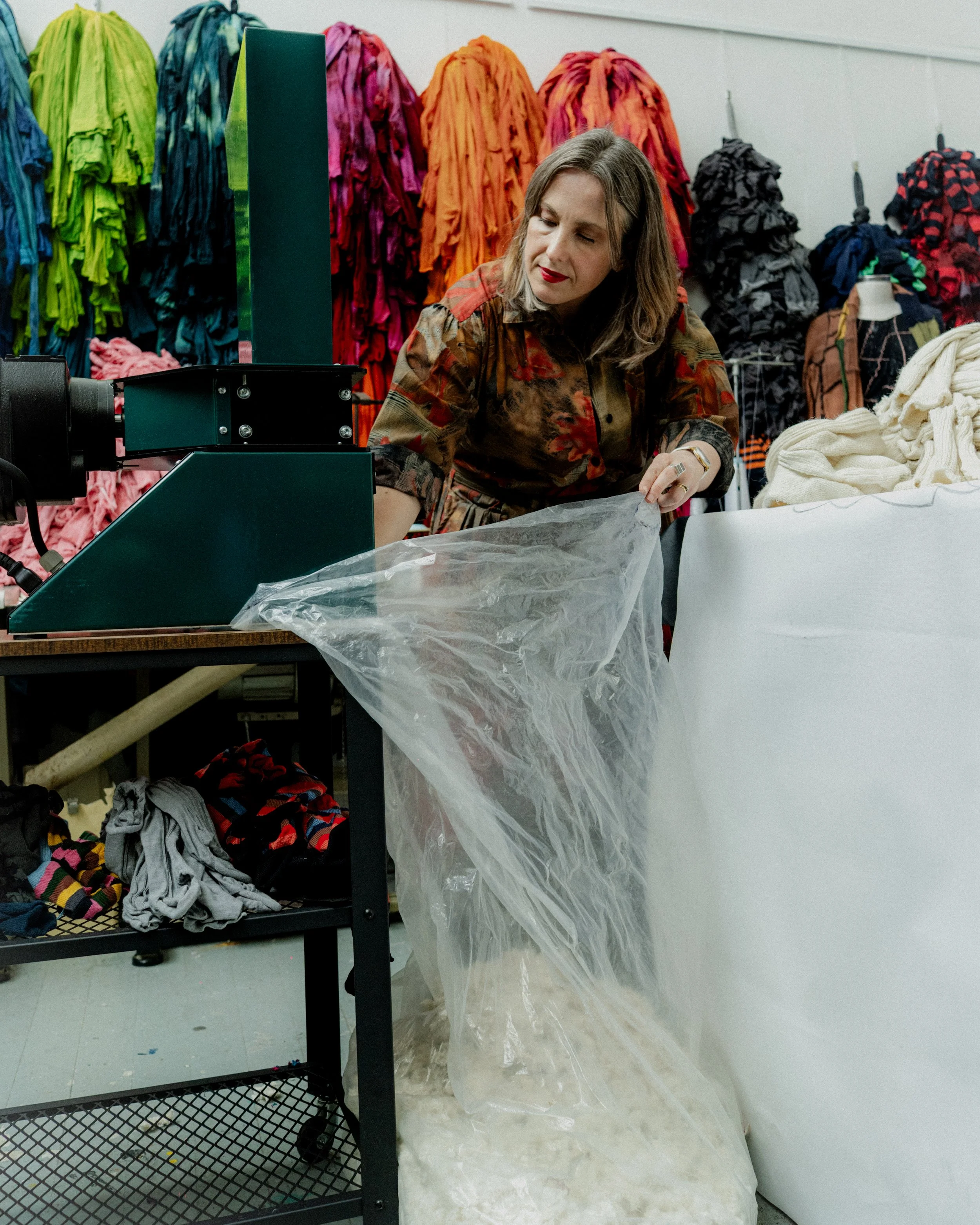
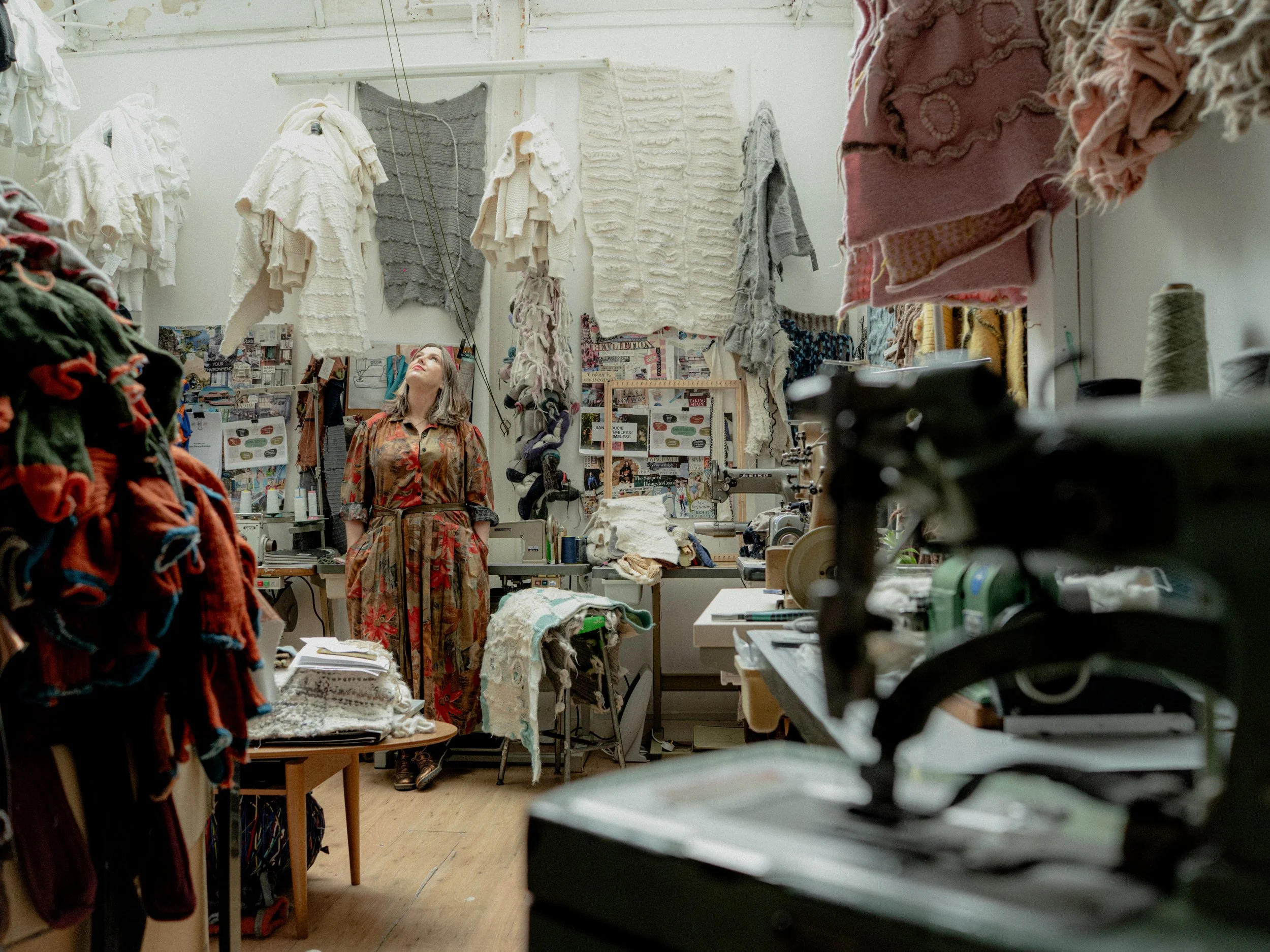
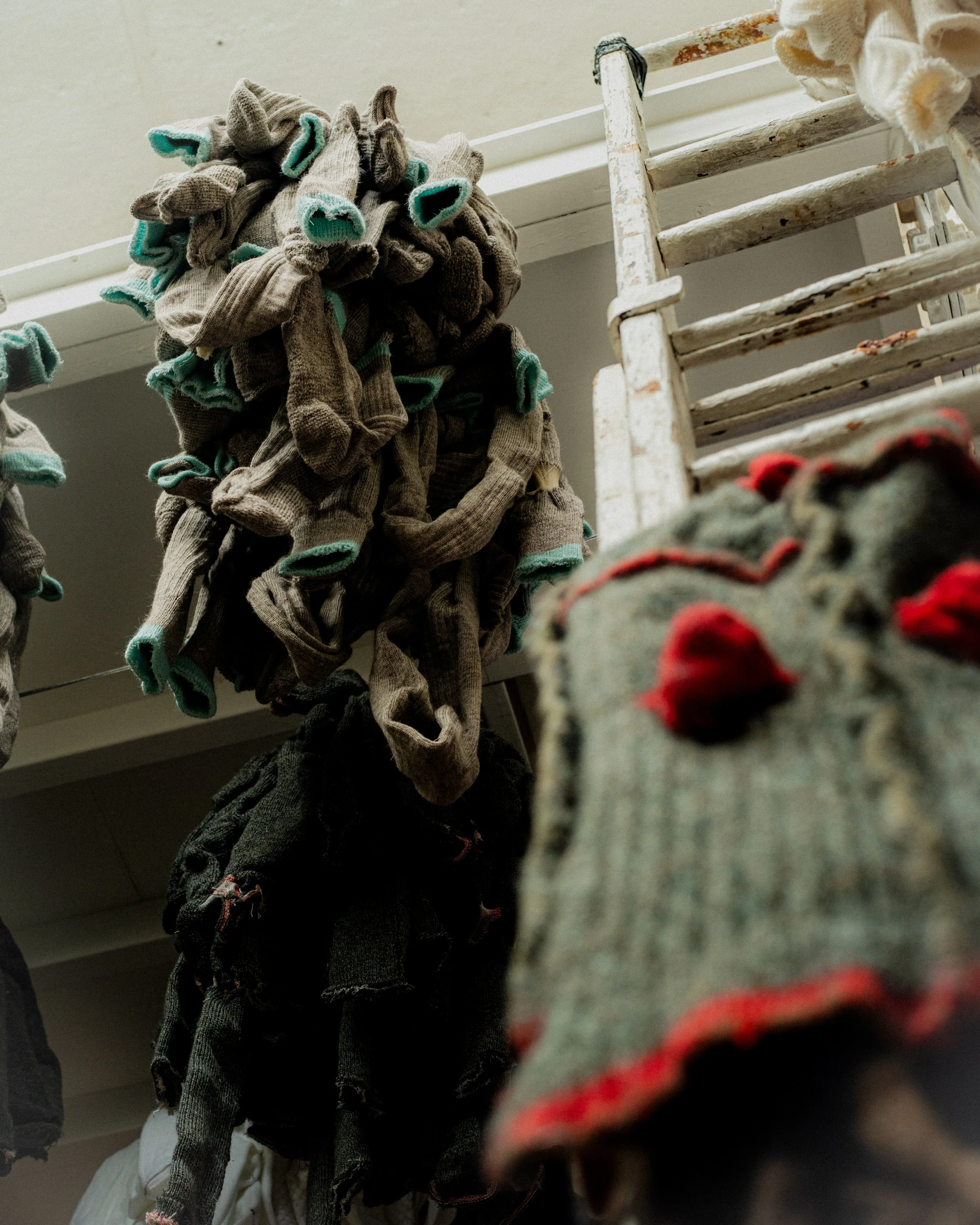
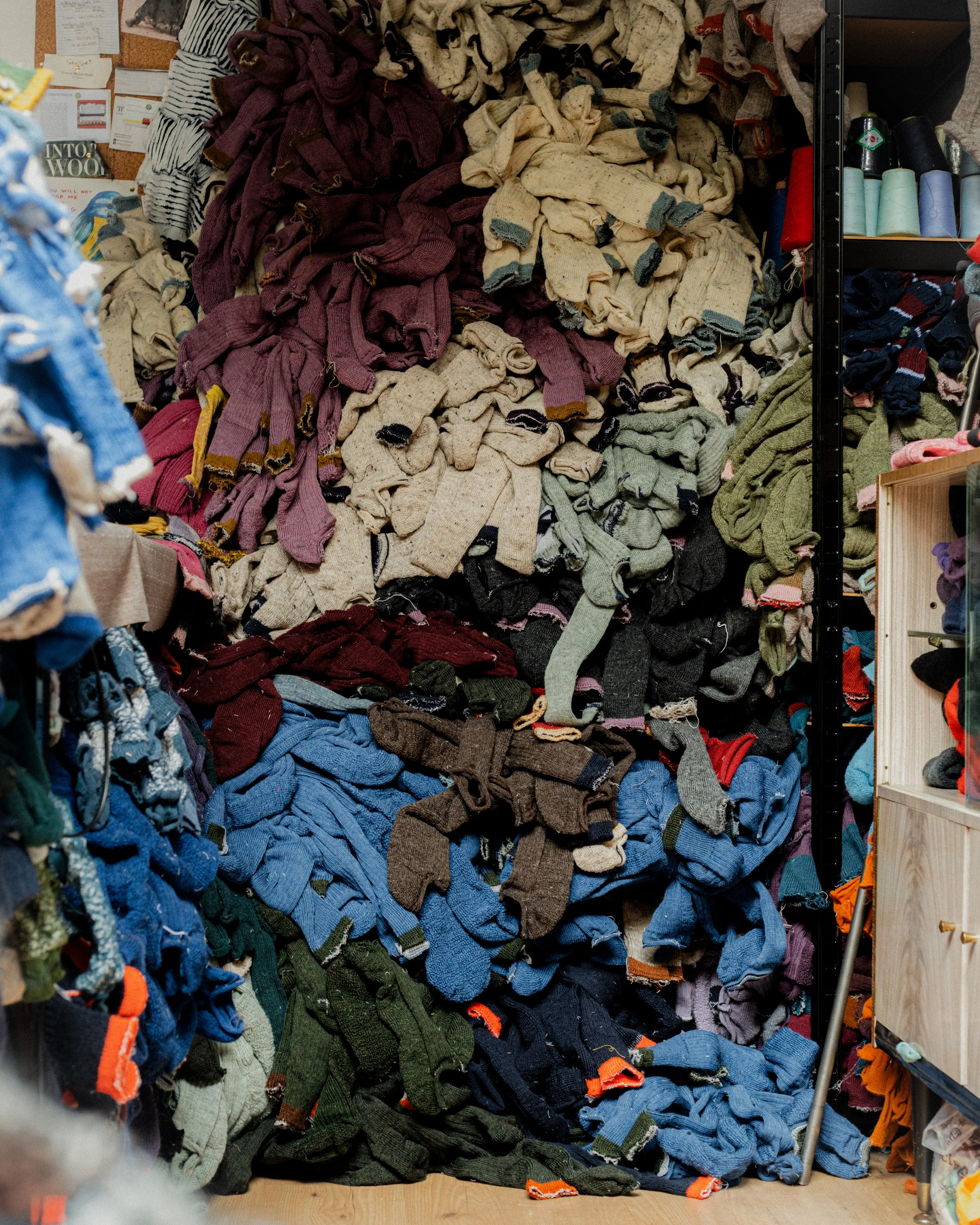
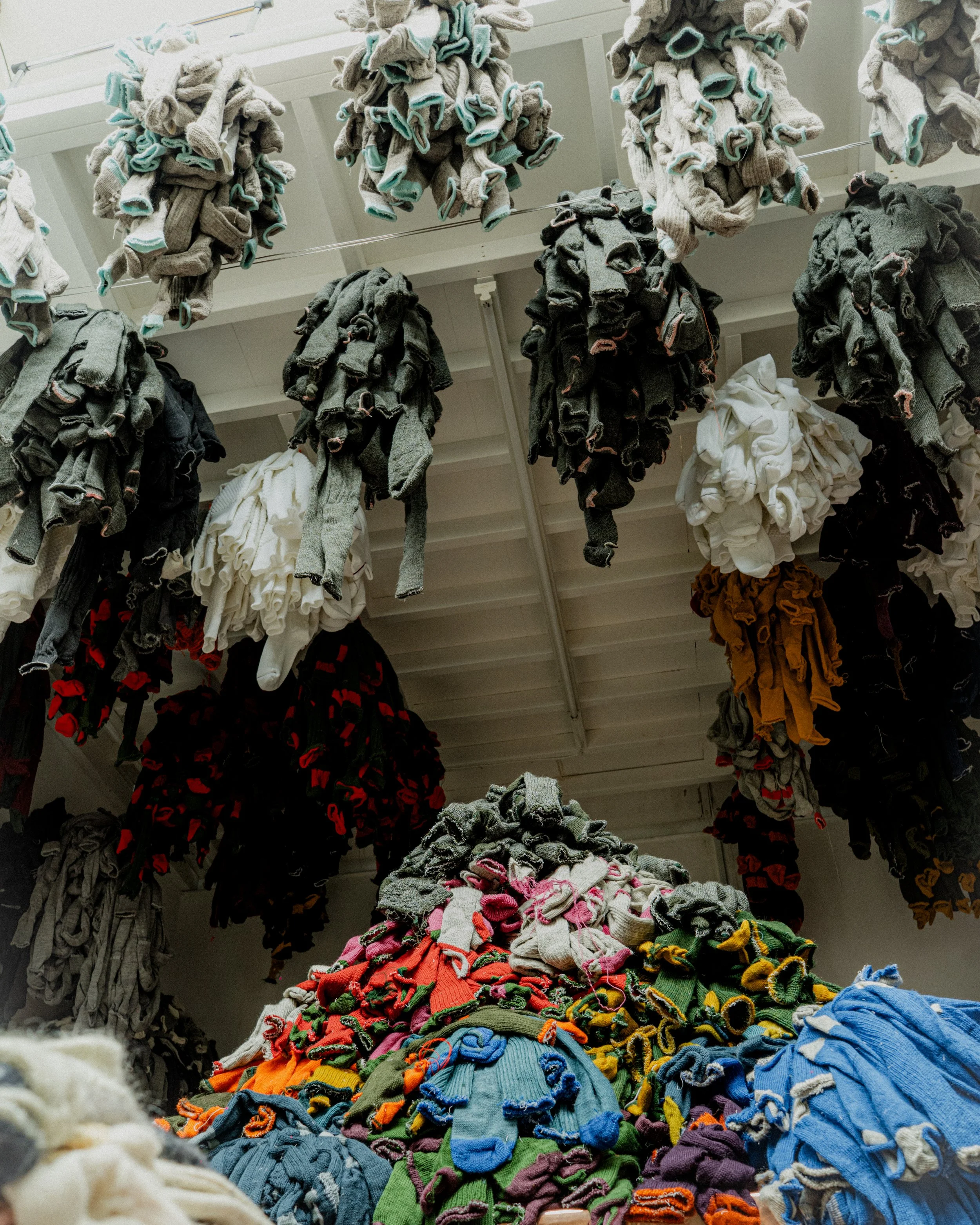
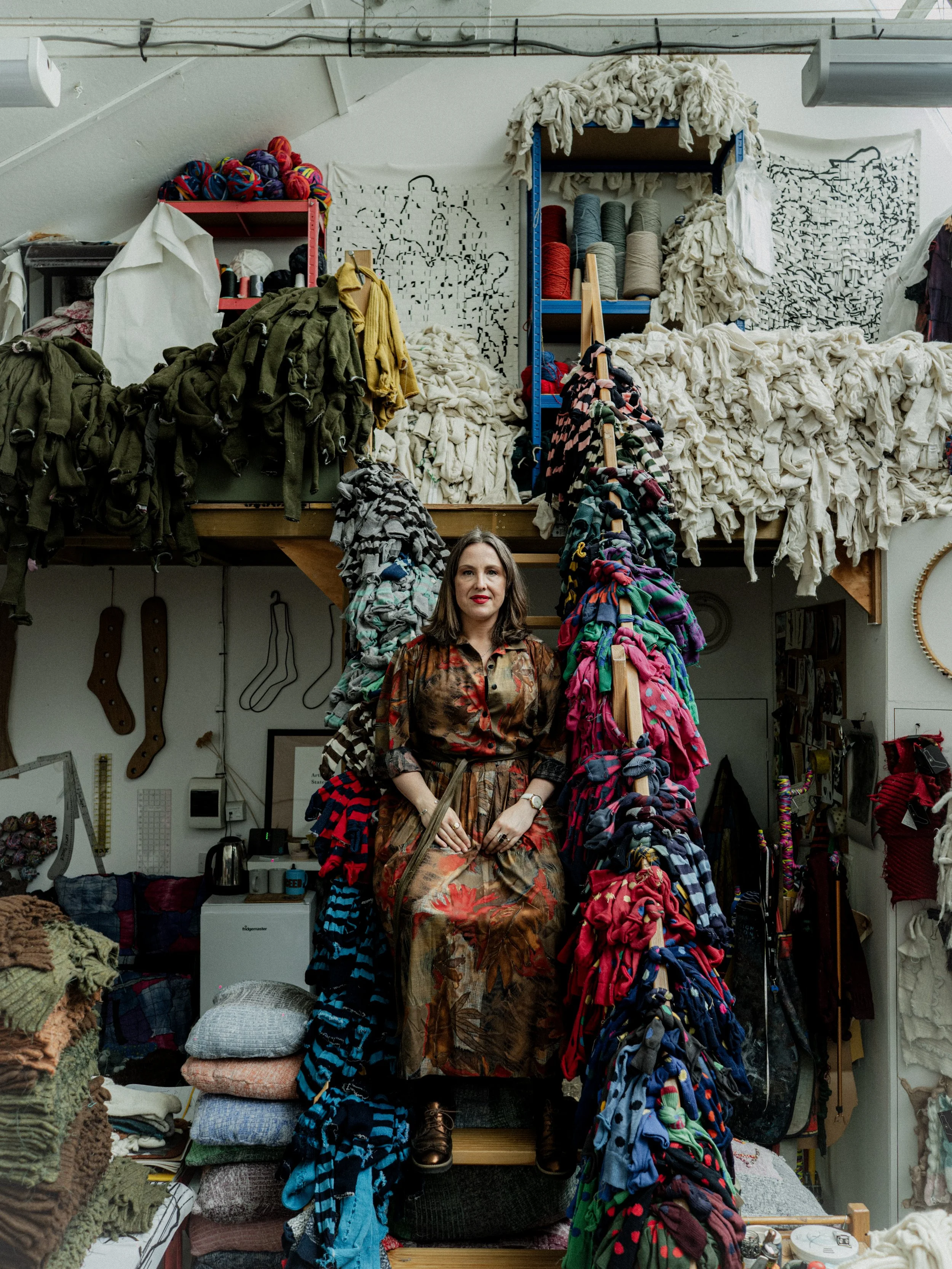
My research explores upcycling as both a creative practice and a research method, focusing on the reuse of pre-consumer sock and wool waste from UK mills and the reimagined use of obsolete sewing and textile machinery. Through this, I develop material-responsive textile recipes, reuse systems-thinking strategies and frameworks, along with new language for re-making practices. By working closely with UK-based manufacturers and small/micro-enterprises, my practice demonstrates how locally sourced textile waste can anchor new forms of collaboration, knowledge-sharing, cultural production and material innovation.
Waste Textile Experimentation + Development, Creative Reuse Strategies, Narrative Driven Storytelling, Reuse Making Knowledge Systems
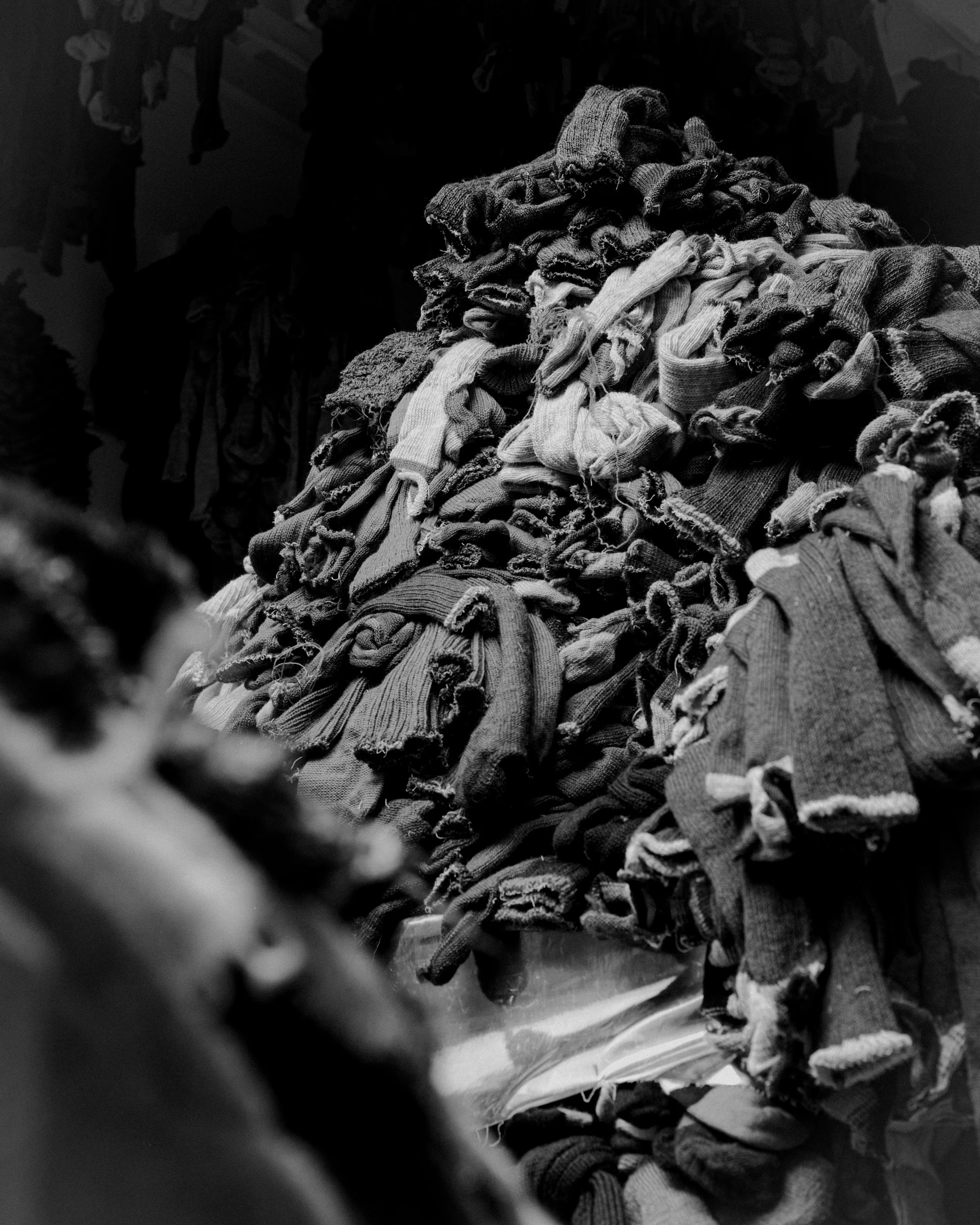
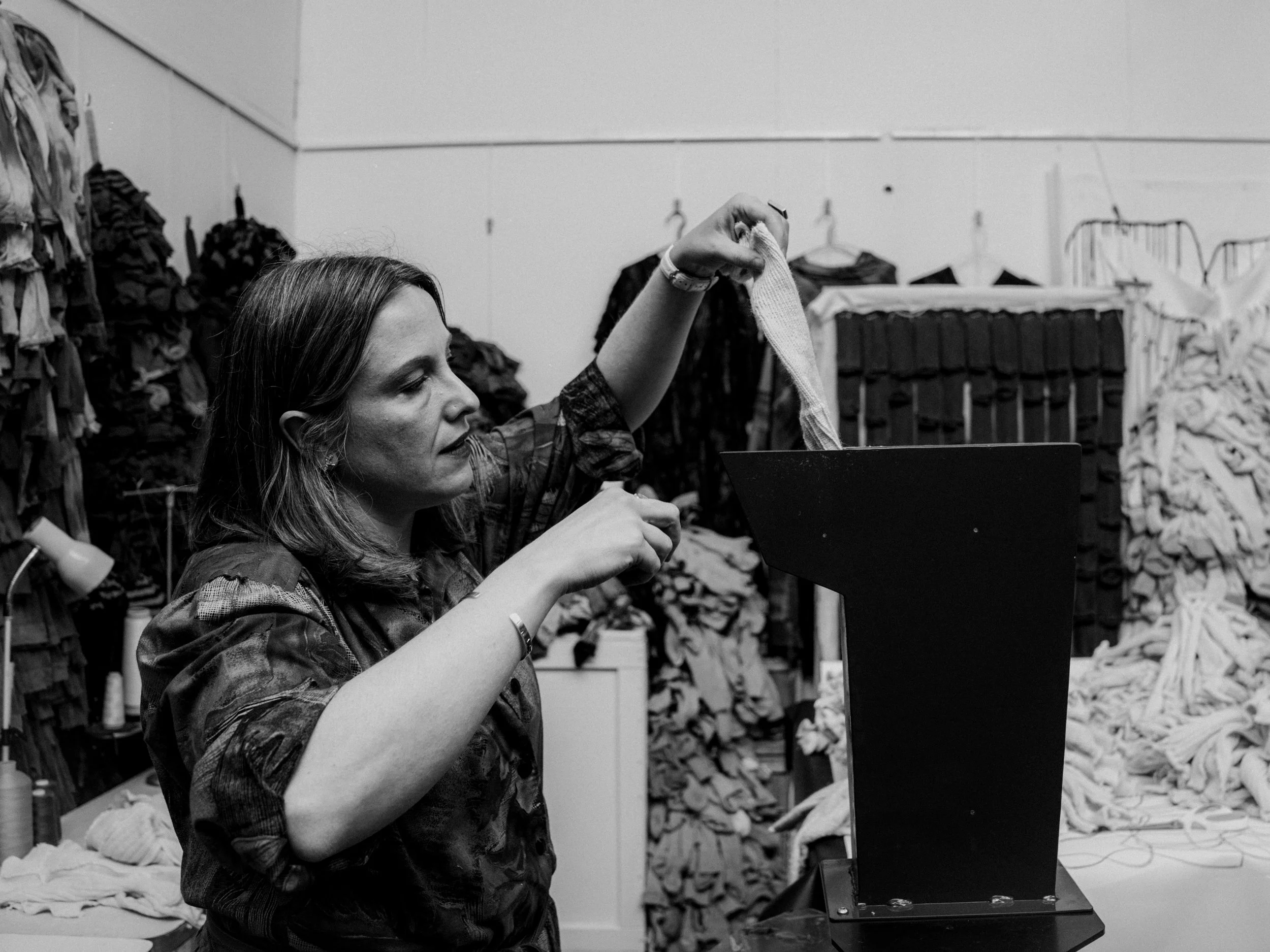
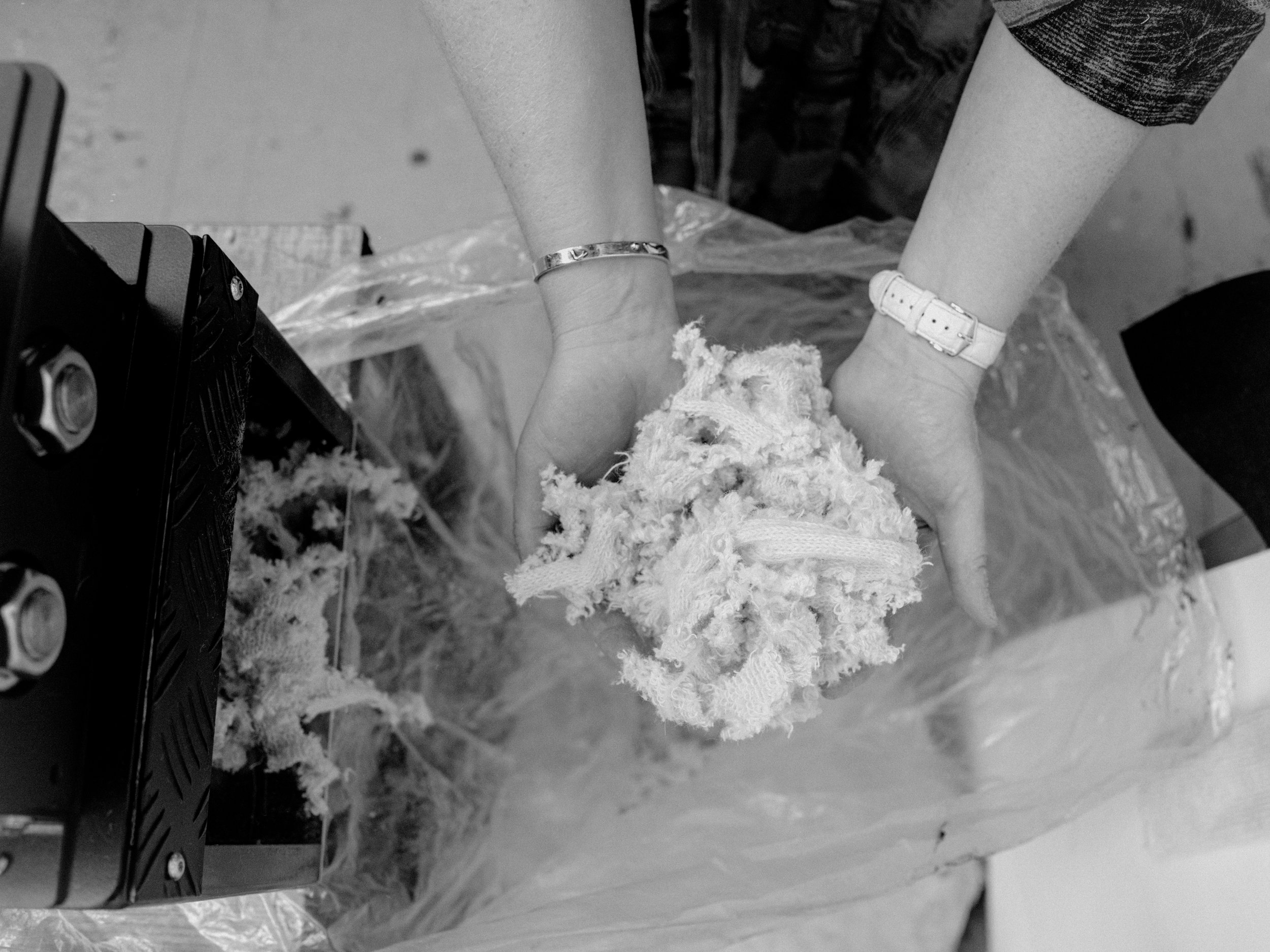
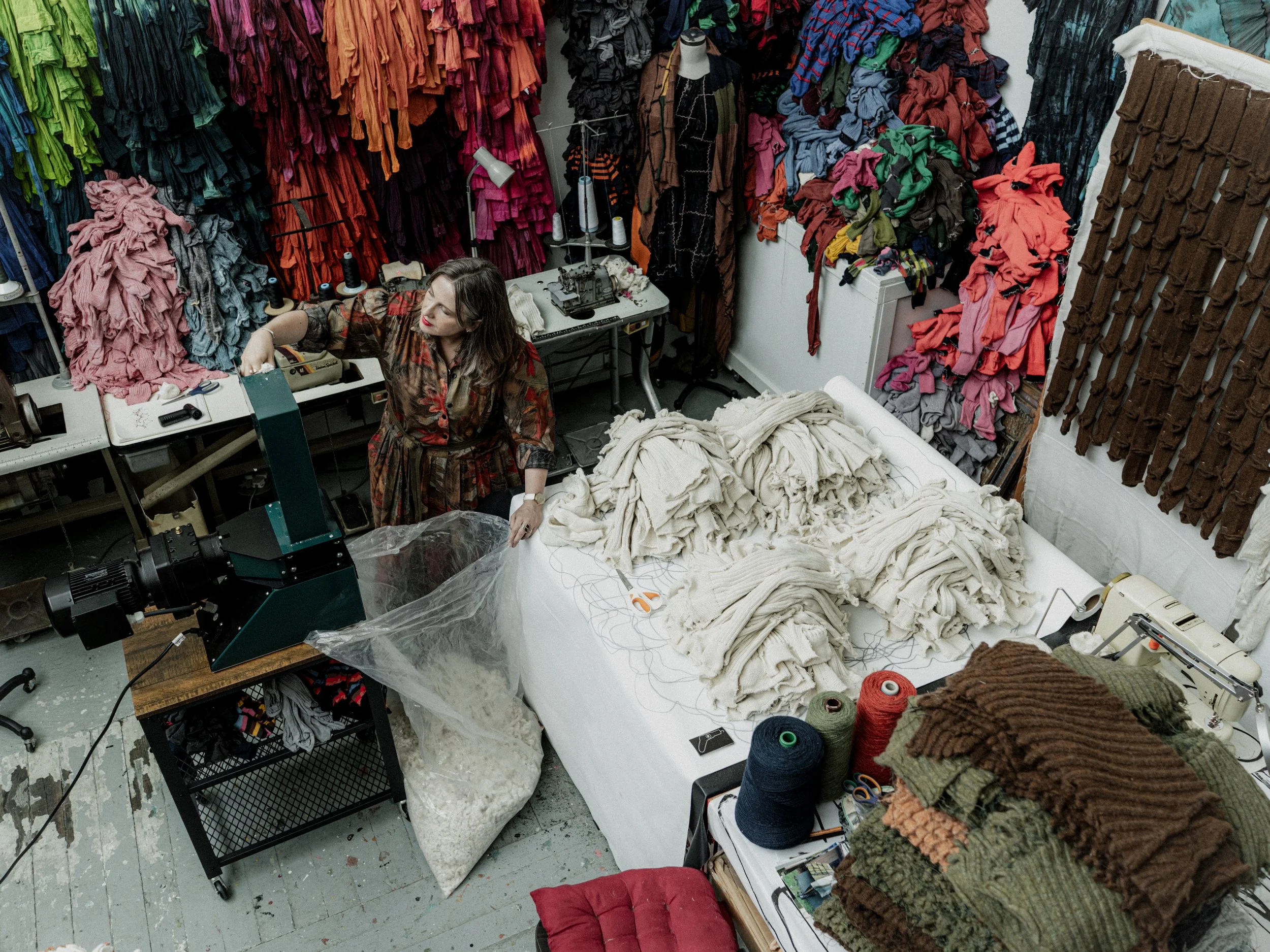
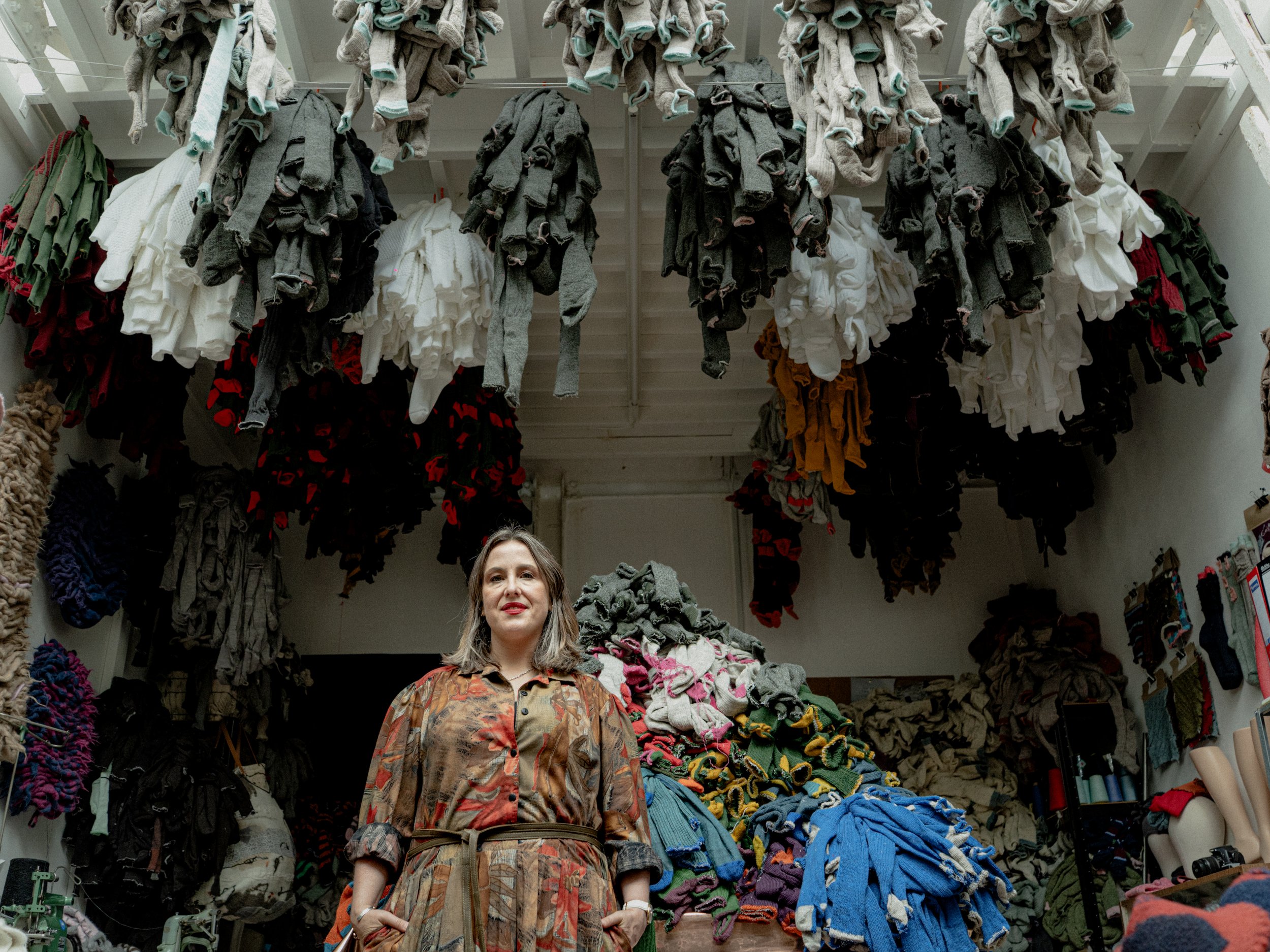
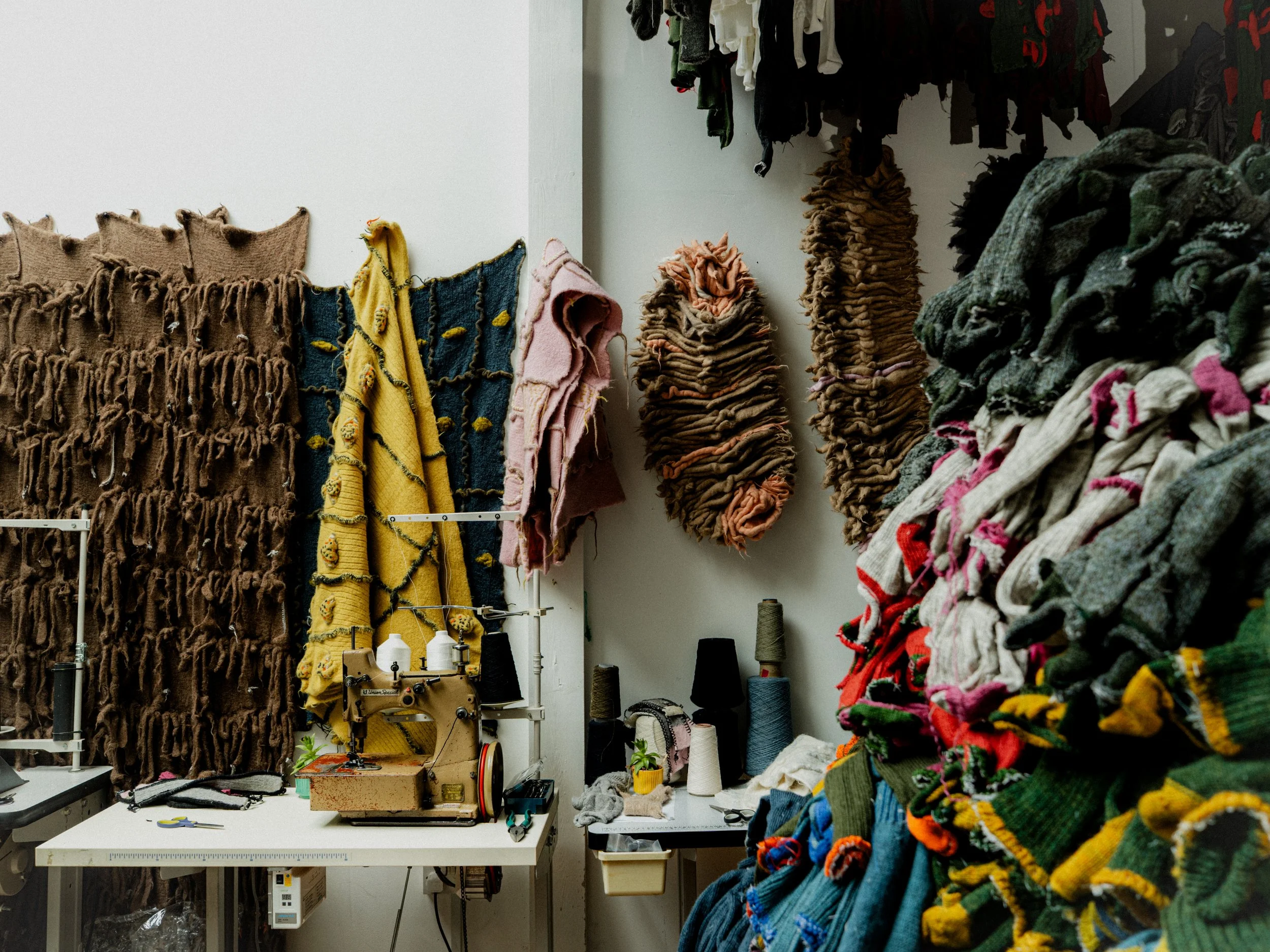
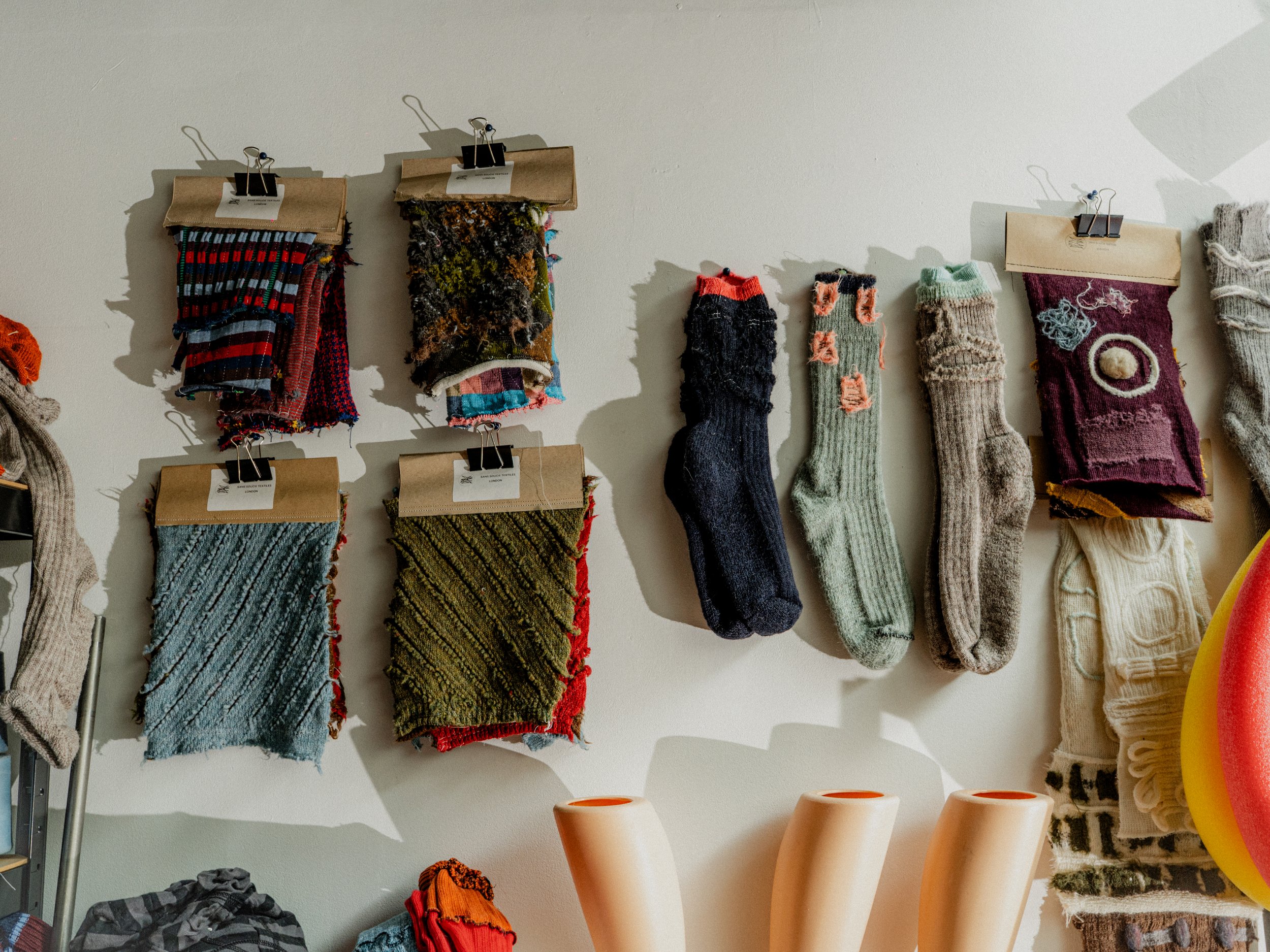
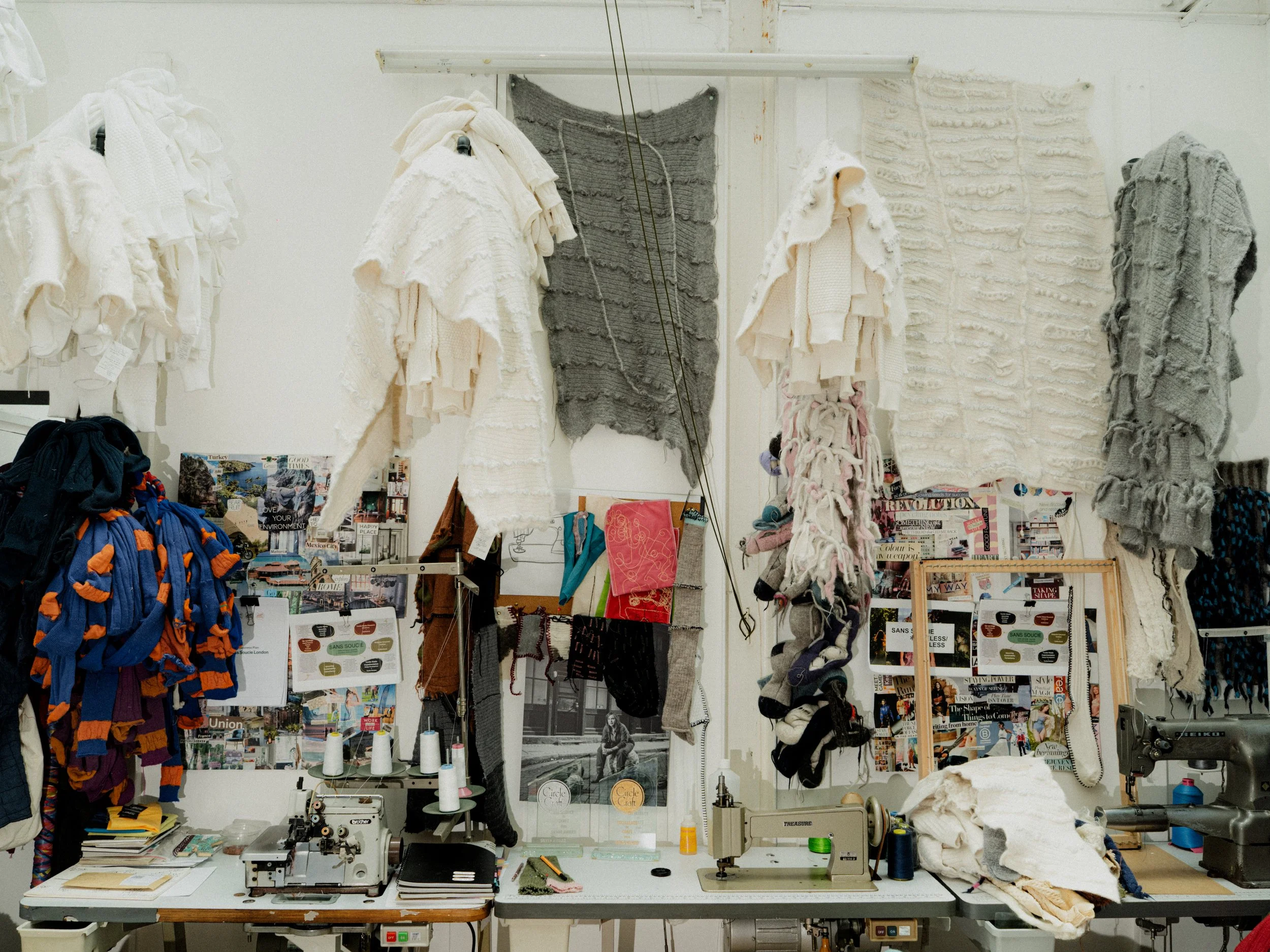
photography: Miki Wecel
Upcycling as method and mindset
Upcycling is is more than a technique for transforming waste in my research; it operates as a living, adaptable system and a way of thinking. My Phd research undertook an upcycling systems thinking approach, not only capturing material outcomes, but the experience of working with waste, framing it as a collaborator. This led to the formation of M.E.N.D, an upcycling system and reuse framework alongwith Up-cycology™, a reuse mindset framework.
Frameworks: M.E.N.D. and Up-Cycology™
My research introduced M.E.N.D. (Method, Evaluate, Navigate, Design), an upcycling systems framework and reflective research tool aimed at supporting reuse practitioners in mapping, testing, and evaluating creative reuse strategies. Alongside this sits Up-Cycology™, a mindset and language for responsible upcycling that centres resource awareness, adaptability, waste resilience, and craft-minded practice. Together, these frameworks help designers connect hands-on experimentation with systems thinking, enabling more intentional, relational approaches to textile waste. Both of these frameworks were designed to see waste as a catalyst for new behaviours, relationships, and modes of reuse production.
Reimagining obsolete machinery
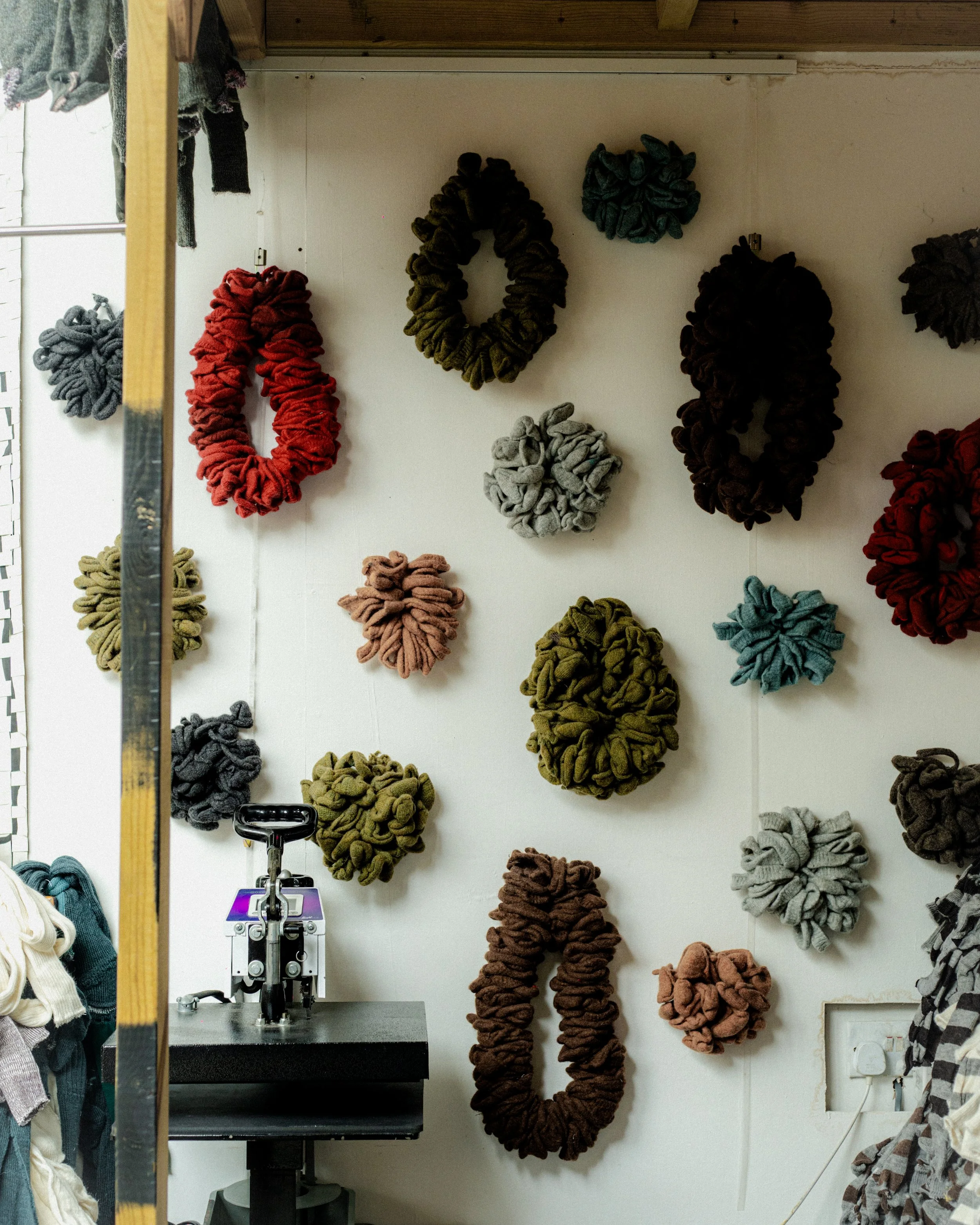
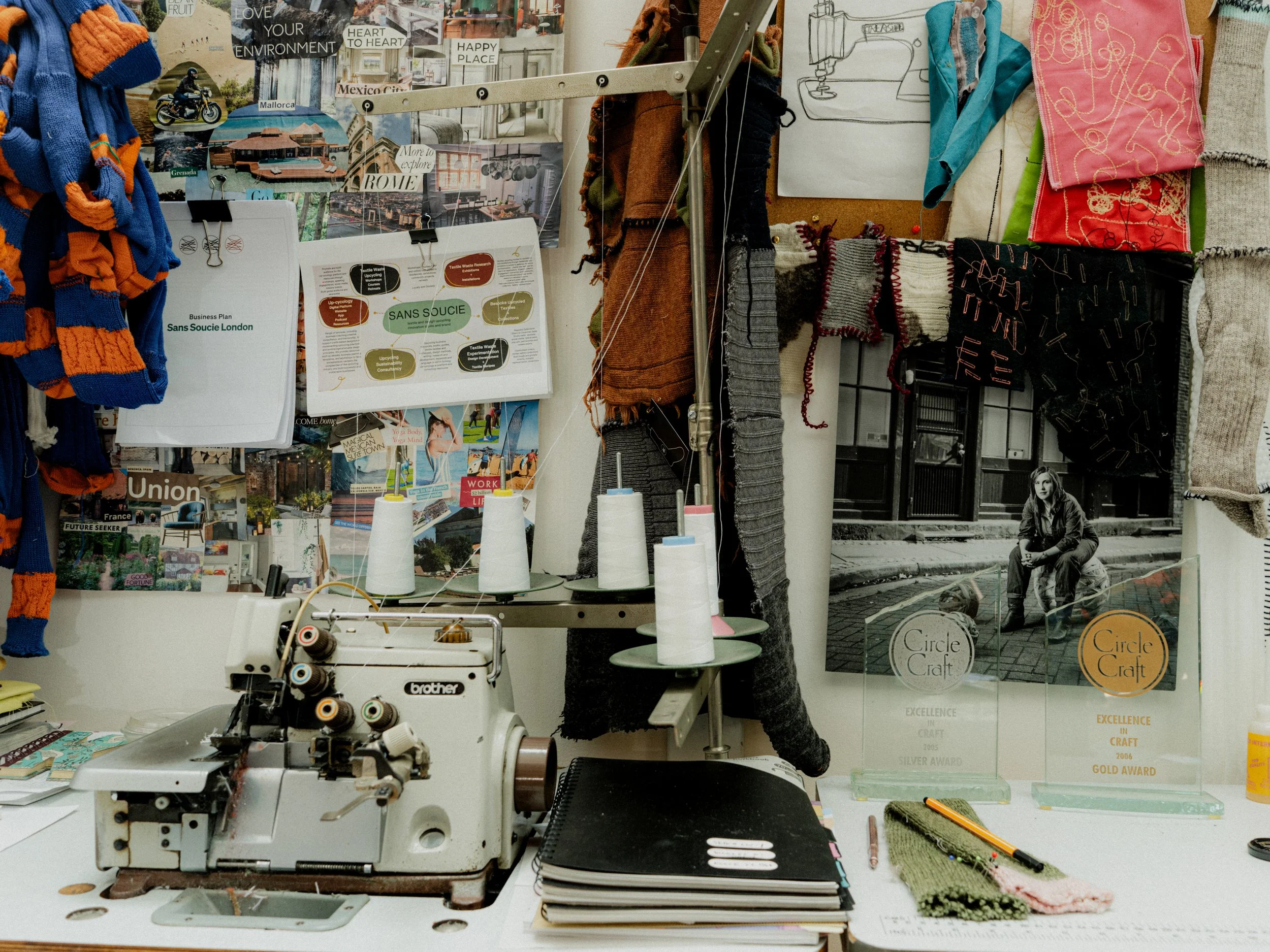
A core strand of my practice reframes obsolete sewing and textile machinery as co-creators, expanding their role beyond their original industrial functions. These machines are used as surface design and manipulation tools, enabling new upcycling assembly methods for complex textile waste streams such as sock waste blends. In doing so, my research positions existing tools and infrastructures as valuable resources for local, reuse textile systems.