Katherine Soucie
Textile Waste + Creative Reuse
Commissioned Publications + Articles
2022
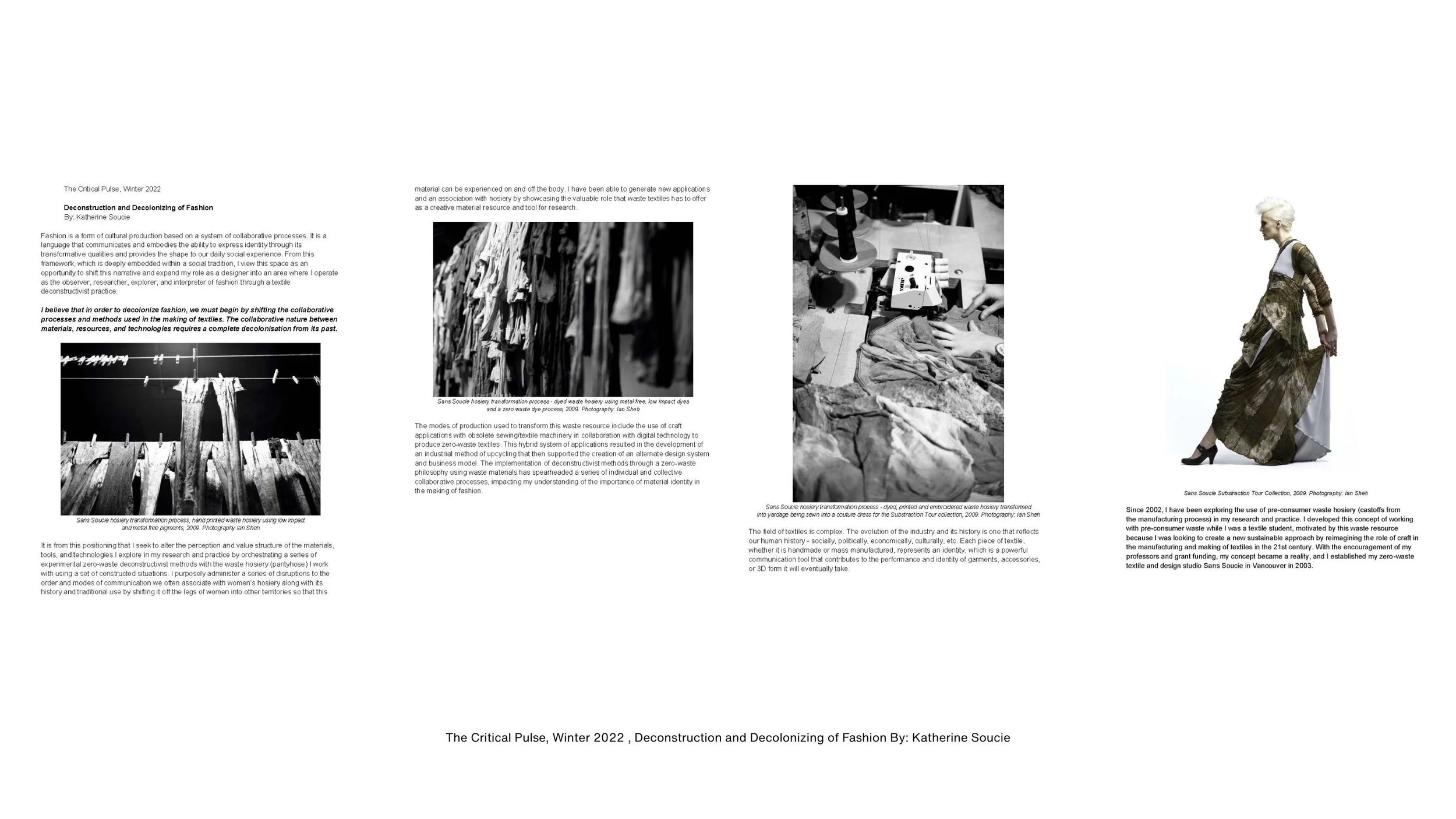
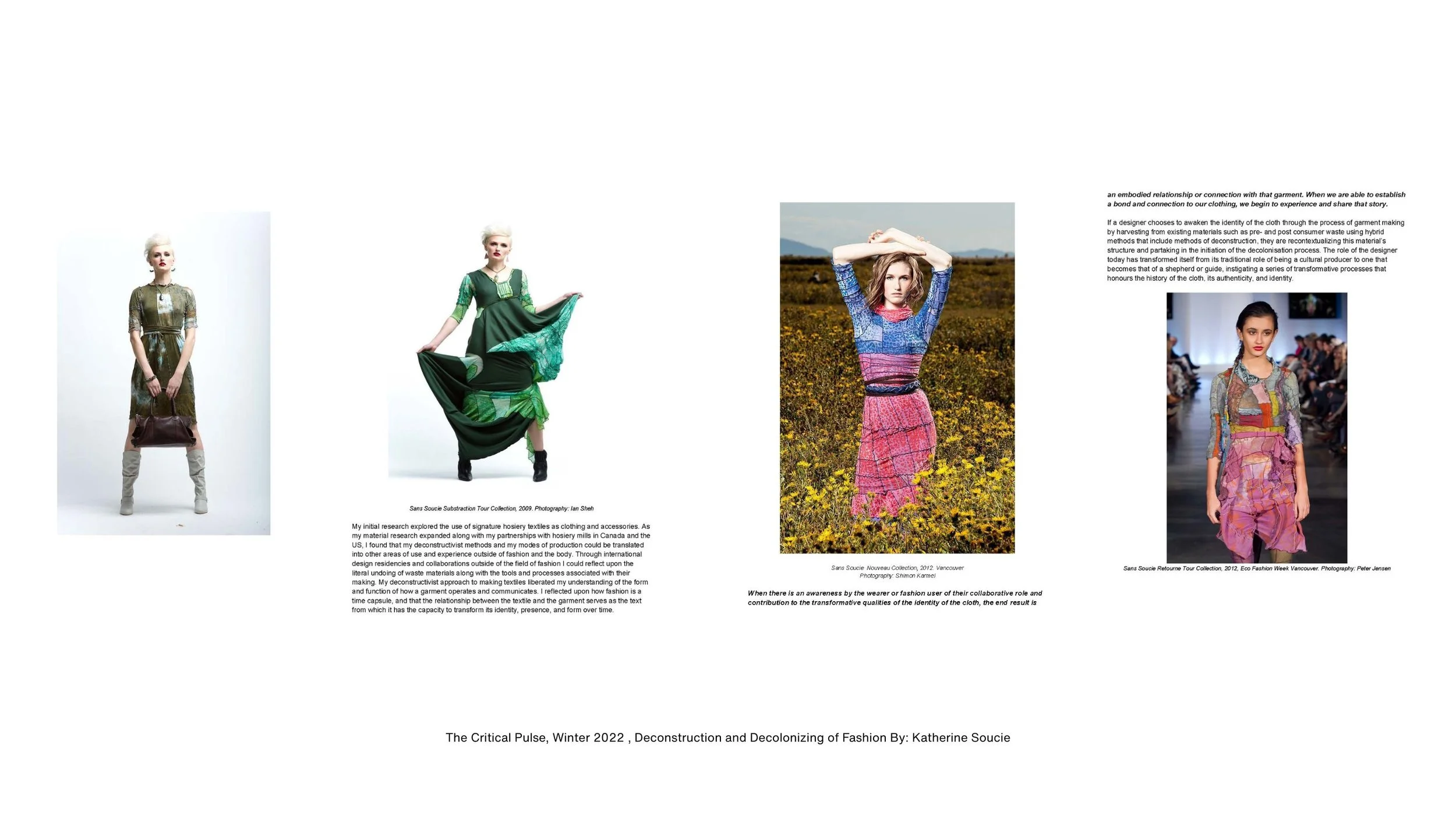
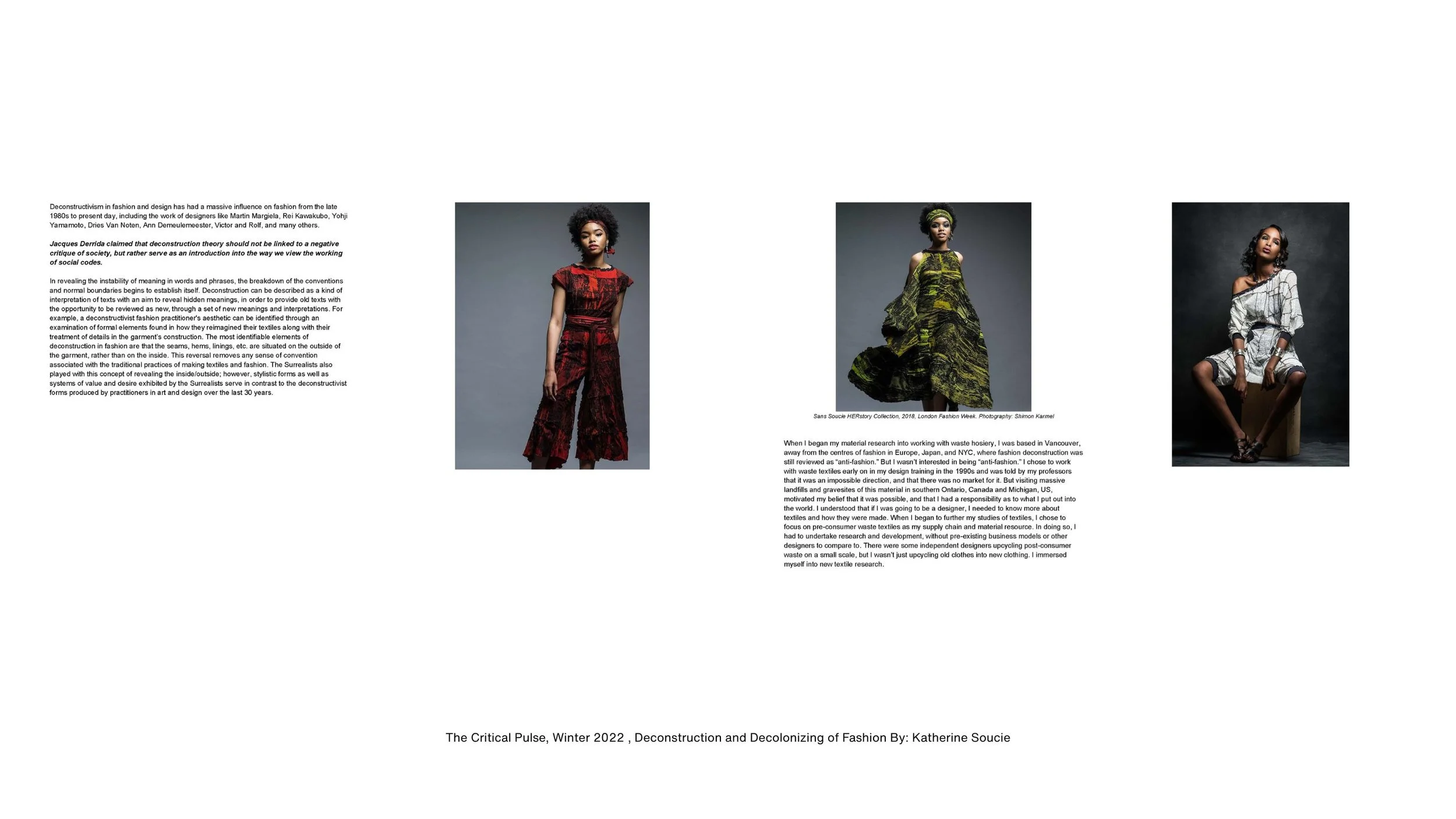
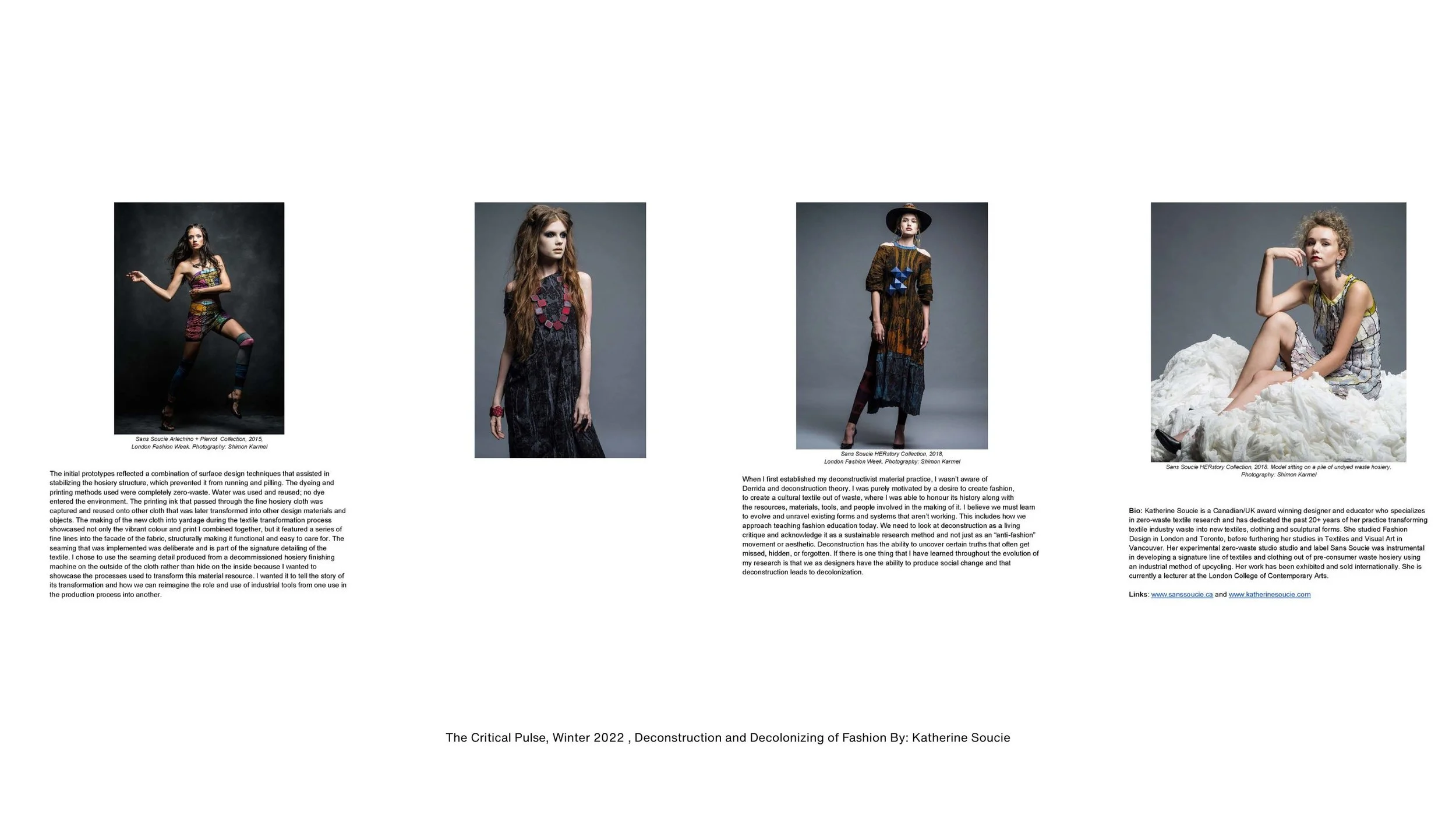
“I believe that in order to decolonize fashion, we must begin by shifting the collaborative processes and methods used in the making of textiles.”
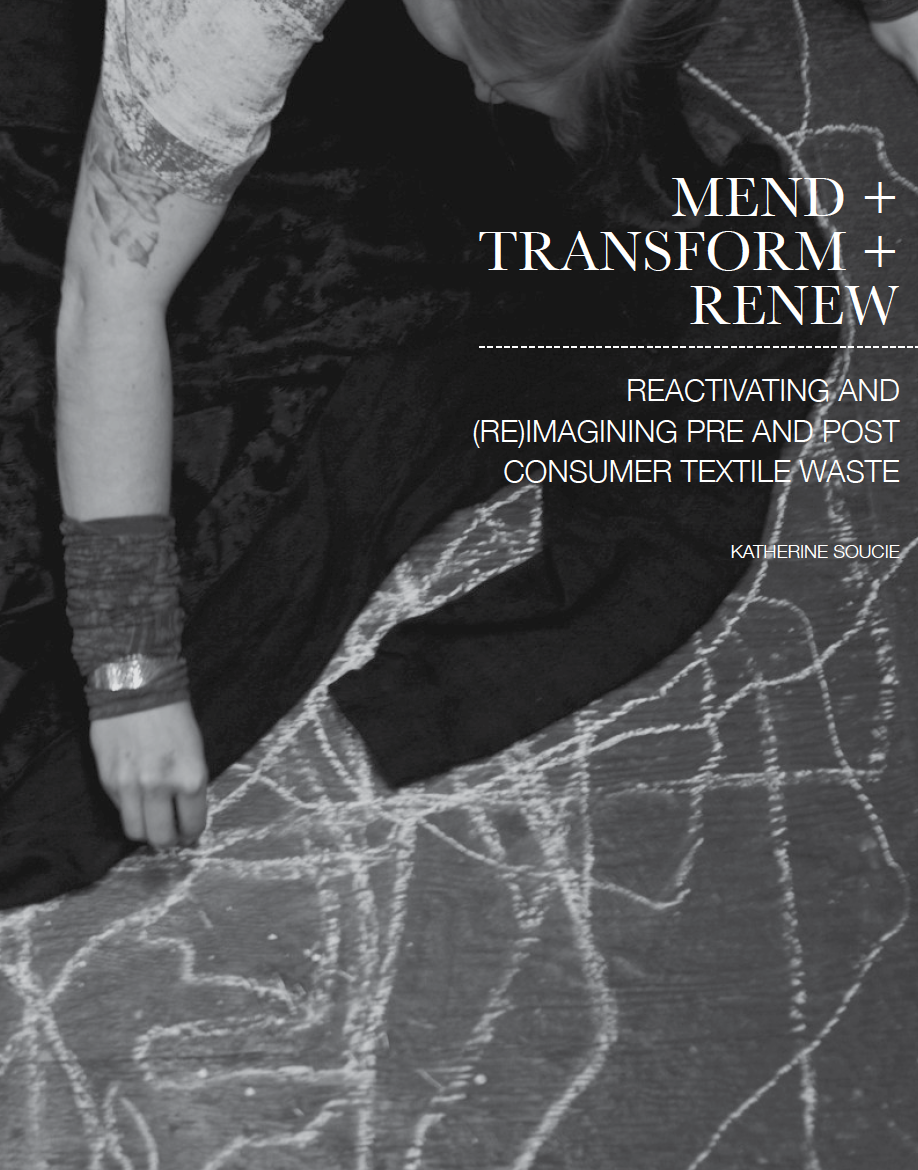
“We need to look at deconstruction as a living critique and acknowledge it as a sustainable research method and not just as an ‘anti-fashion’ movement or aesthetic.”
2017
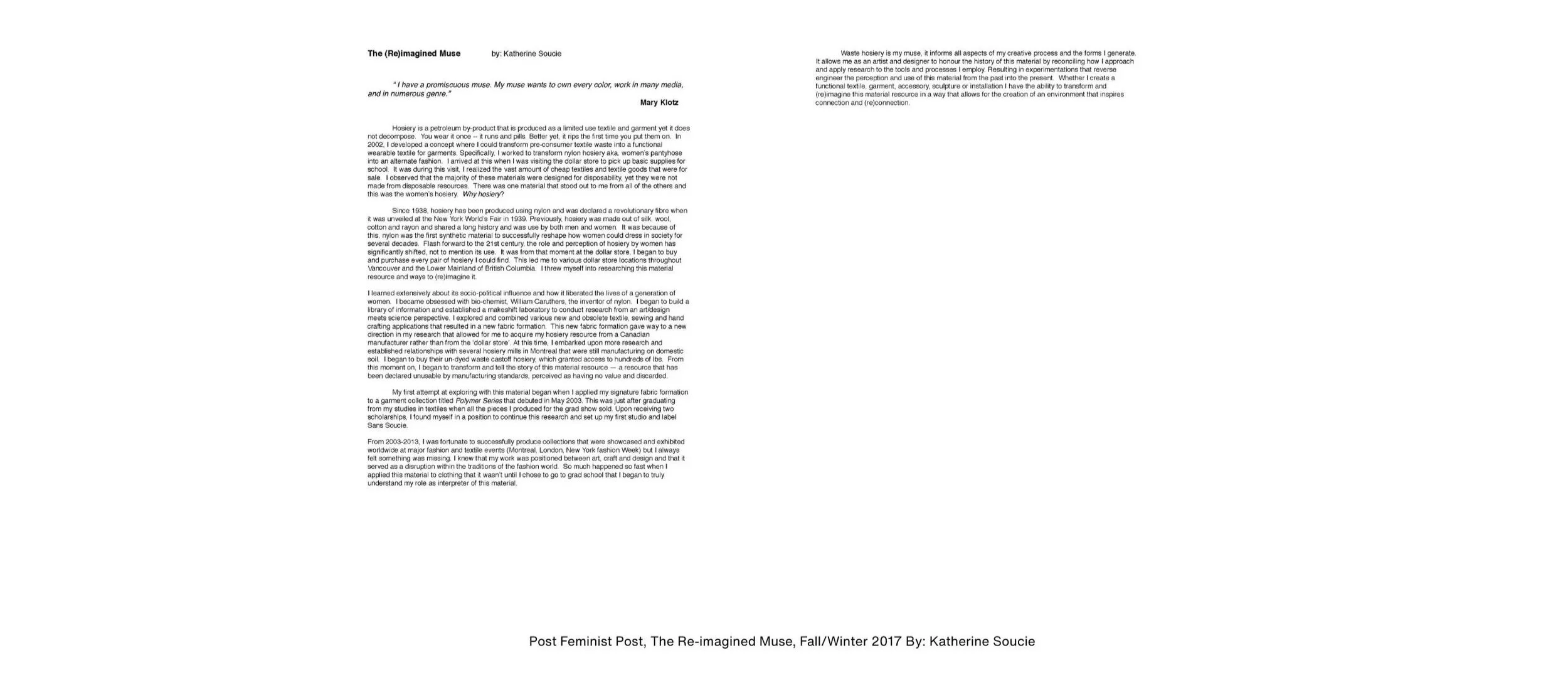
“Waste hosiery is my muse, it informs all aspects of my creative process and the forms I generate.”
“Whether I create a functional textile, garment, accessory, sculpture or installation I have the ability to transform and (re)imagine this material resource in a way that allows for the creation of an environment that inspires connection and (re)connection.”
2016
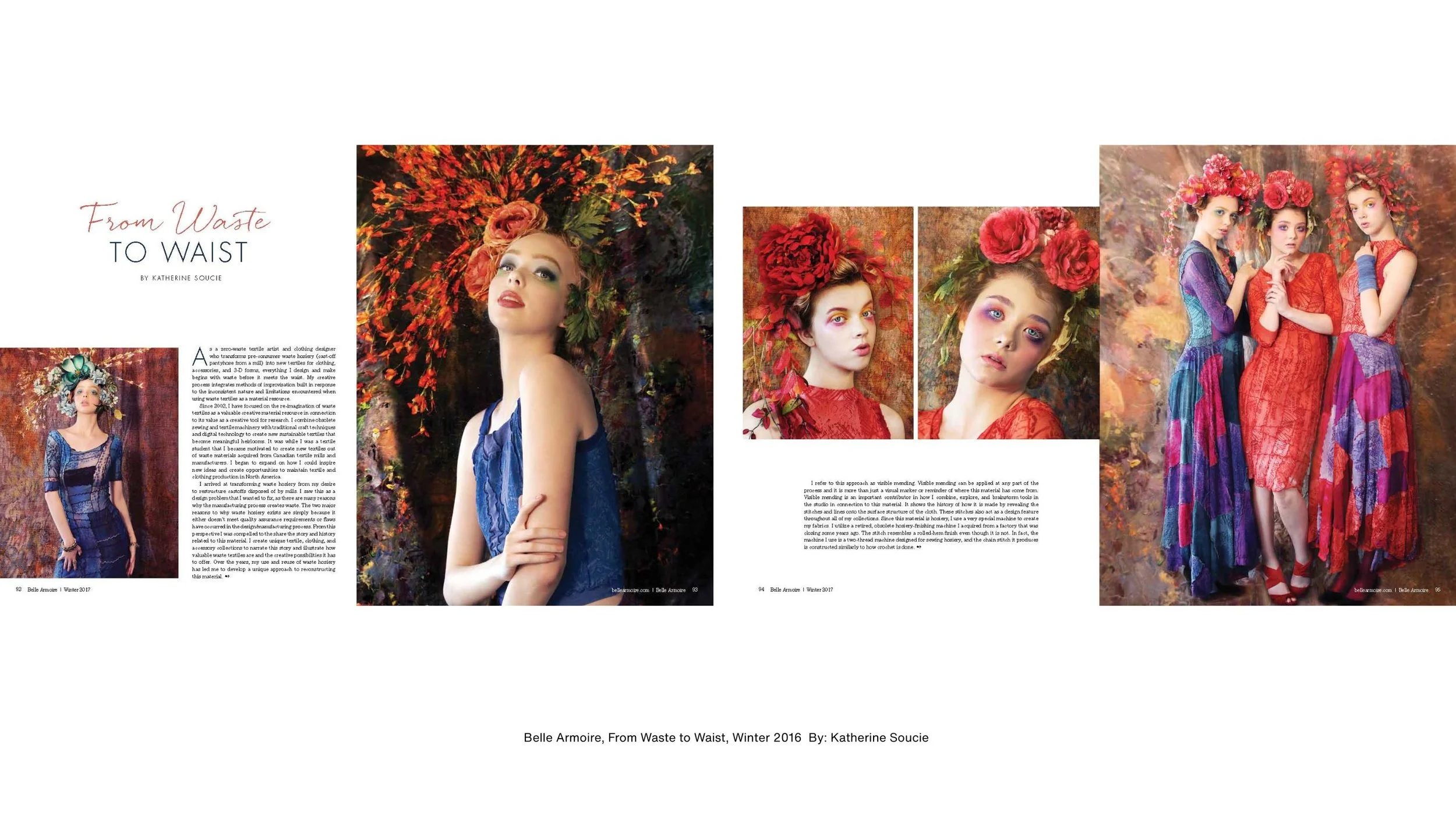
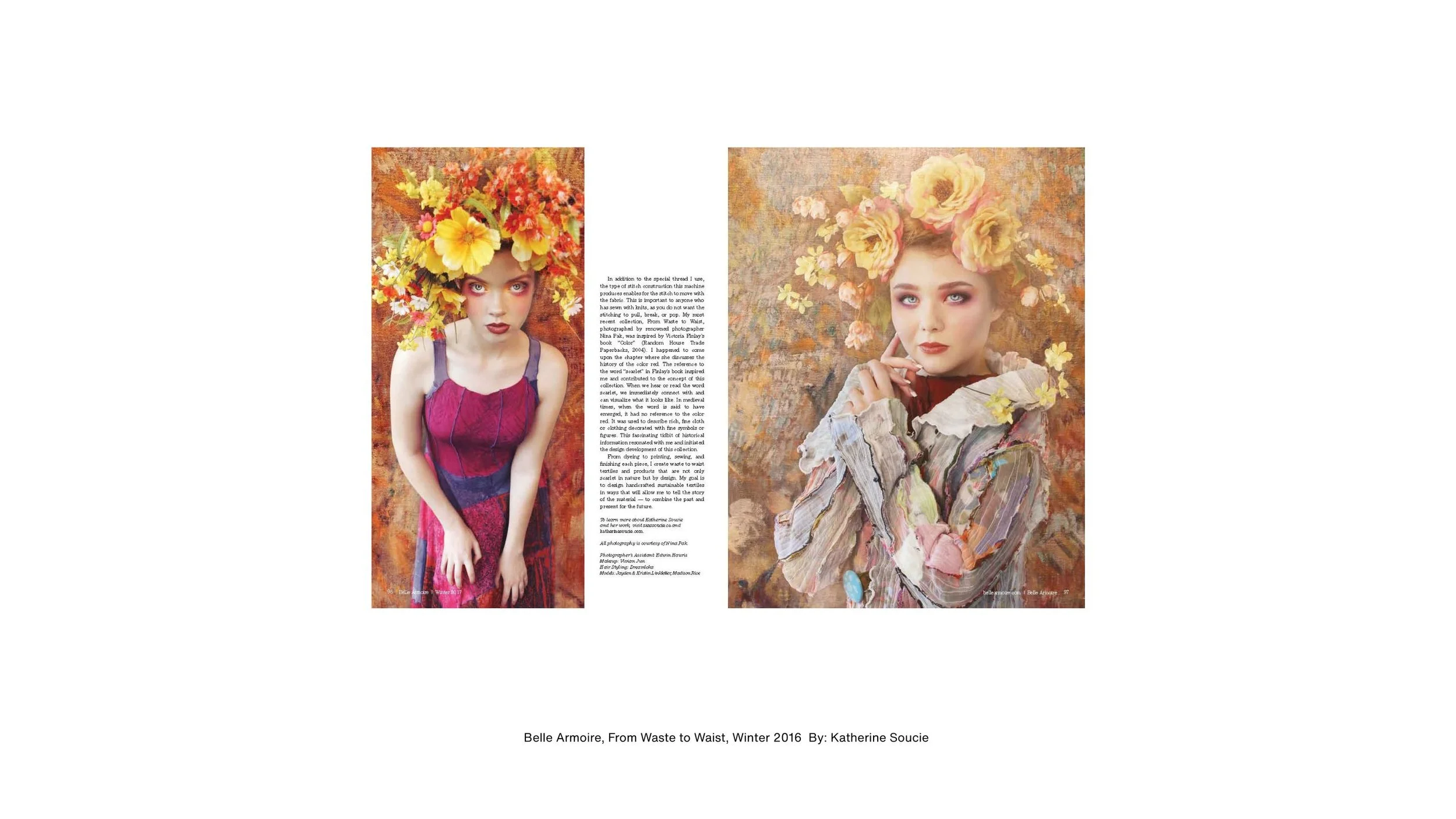
“My most recent collection from Waste to Waist, photographed by renowned photographer Nina Pak, was inspired from Victoria Finlay’s book Color. I happen to come upon the chapter where she discusses the history of the color red. Now there are many shades of red and sources that natural red dye and pigments come from. However, it was the reference to the word scarlet in Finlay’s book that I inspired me and contributed to the concept of this collection.
When we hear or read the word scarlet, we immediately connect with and can visualize what it looks like. Now, the funny thing about the word scarlet is that in midevil times, when the word is said to have emerged, it had no reference to the color red. It in fact, was used to describe rich, fine cloth or clothing decorated with fine symbols or figures. This fascinating tidbit of historical information resonated within me and immediately initiated the design development of this collection.”
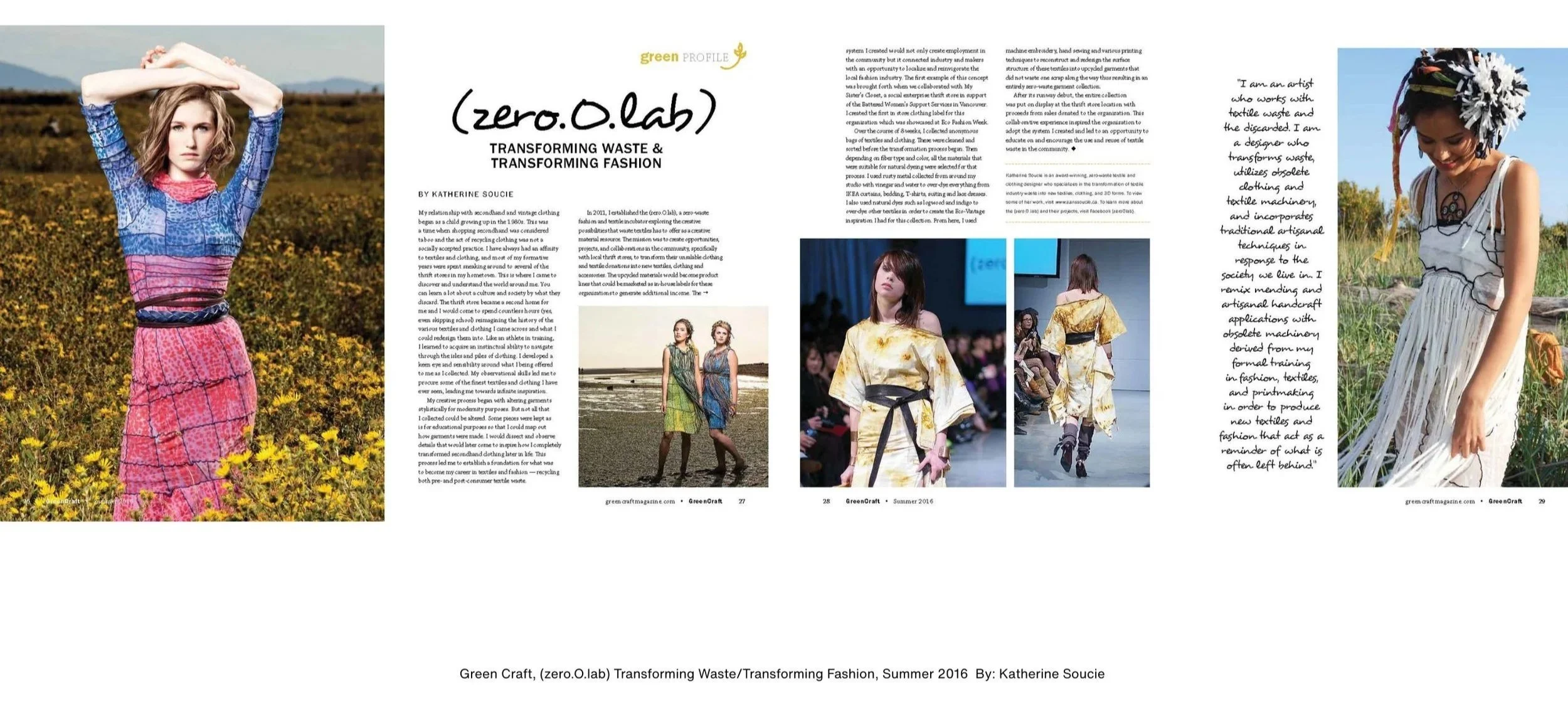
“You can learn a lot about a culture and society by what they discard.”
“To cut is to think. Be empowered by your ability to recycle and to make something meaningful for you and for others to be inspired by.”
2015
“The layers of disfunction that existed in this material spoke to me. I thought here is a material designed to fail.”
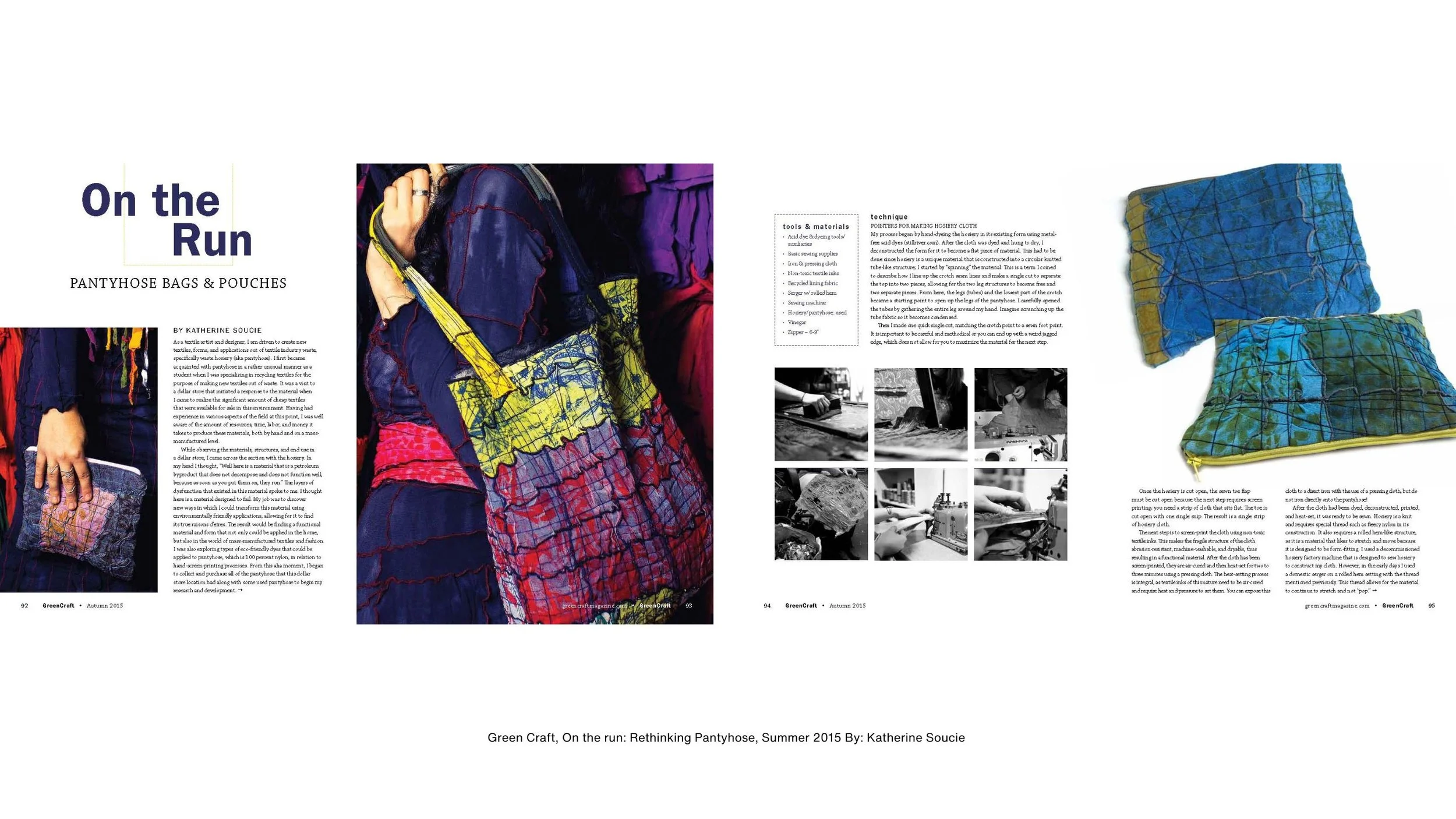
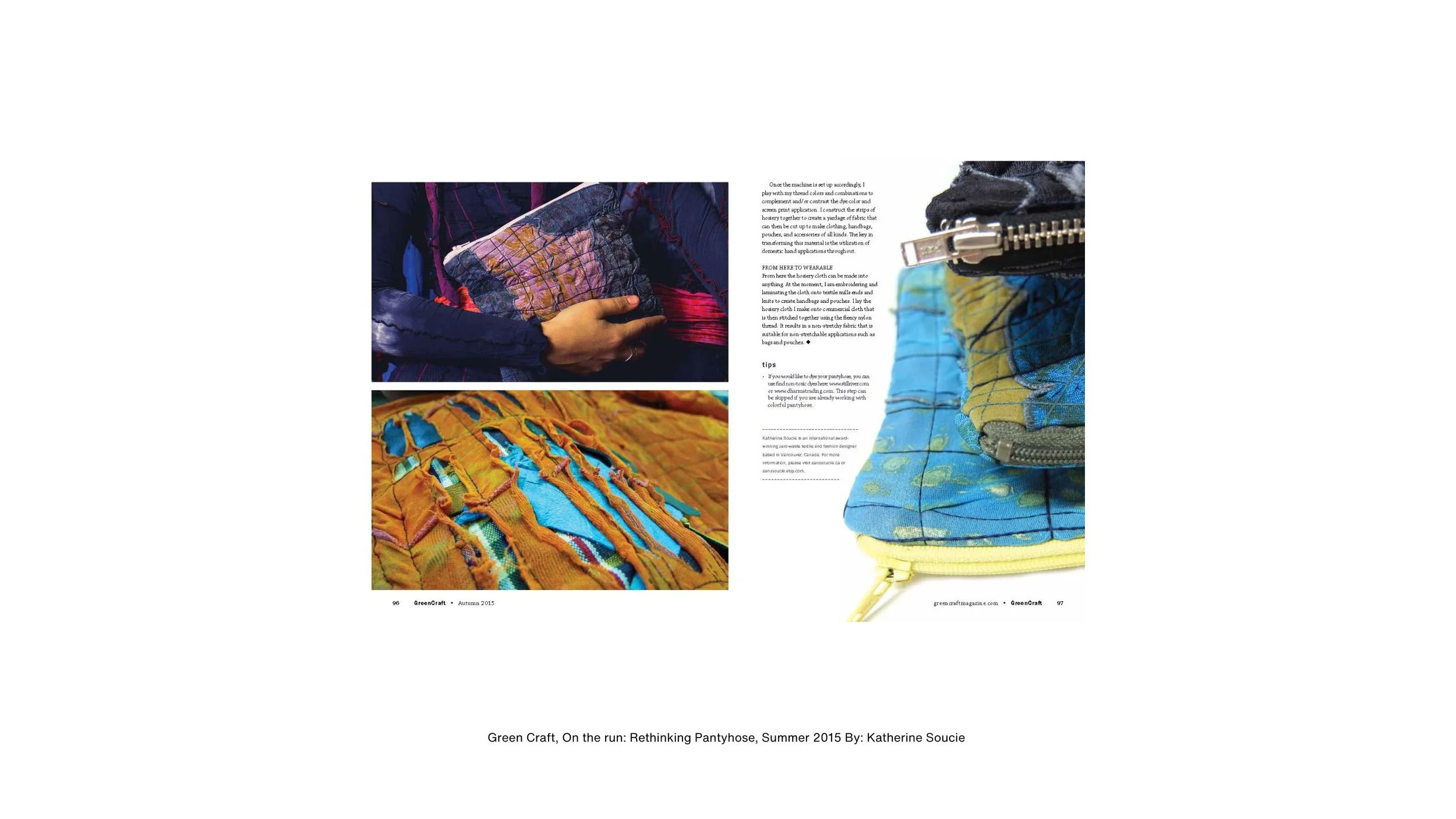
“There is something about the relationships we have to the spaces we occupy… it is the subtle details of these influences that I look to incorporate into the materials and silhouettes I create.”
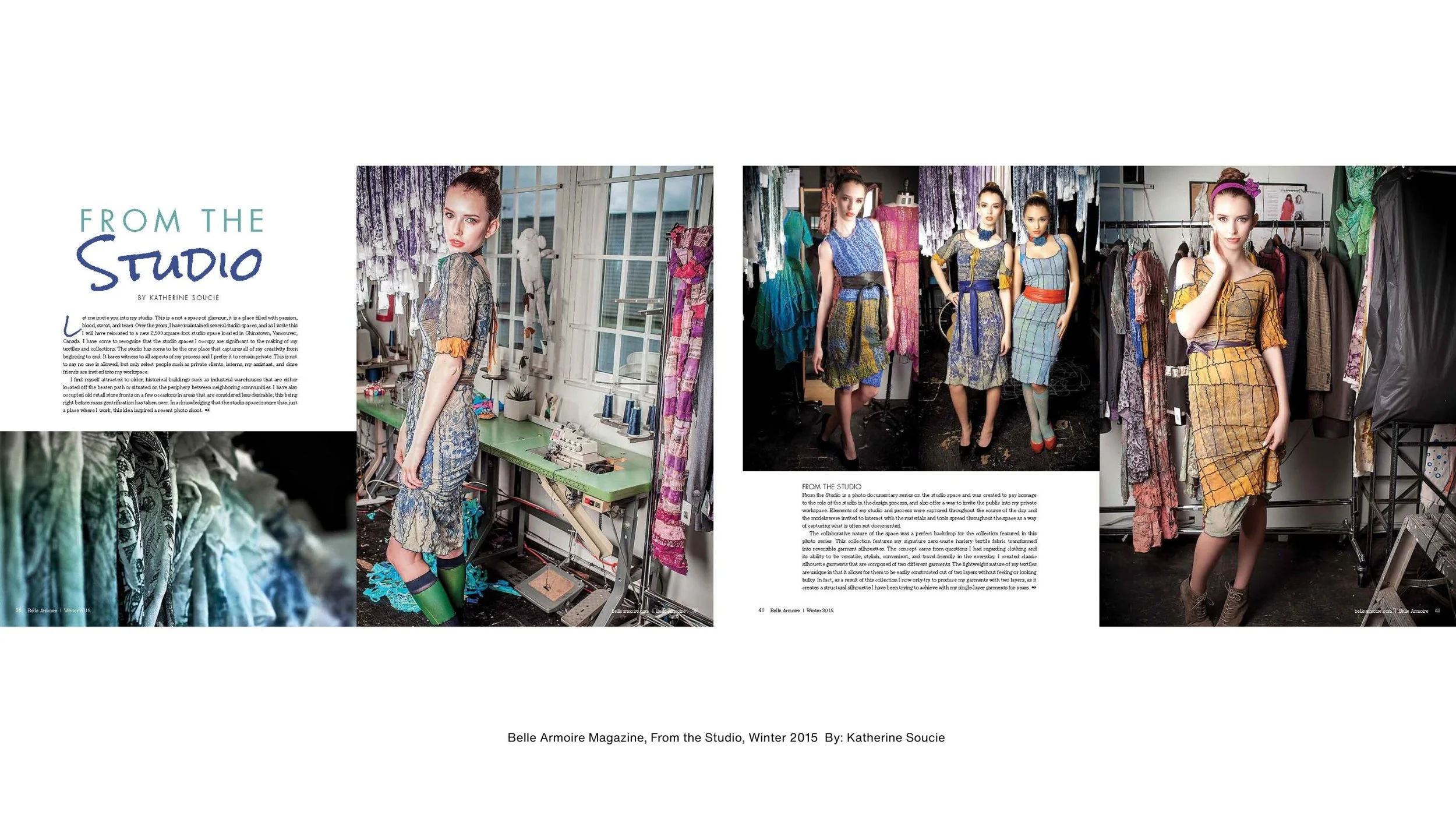
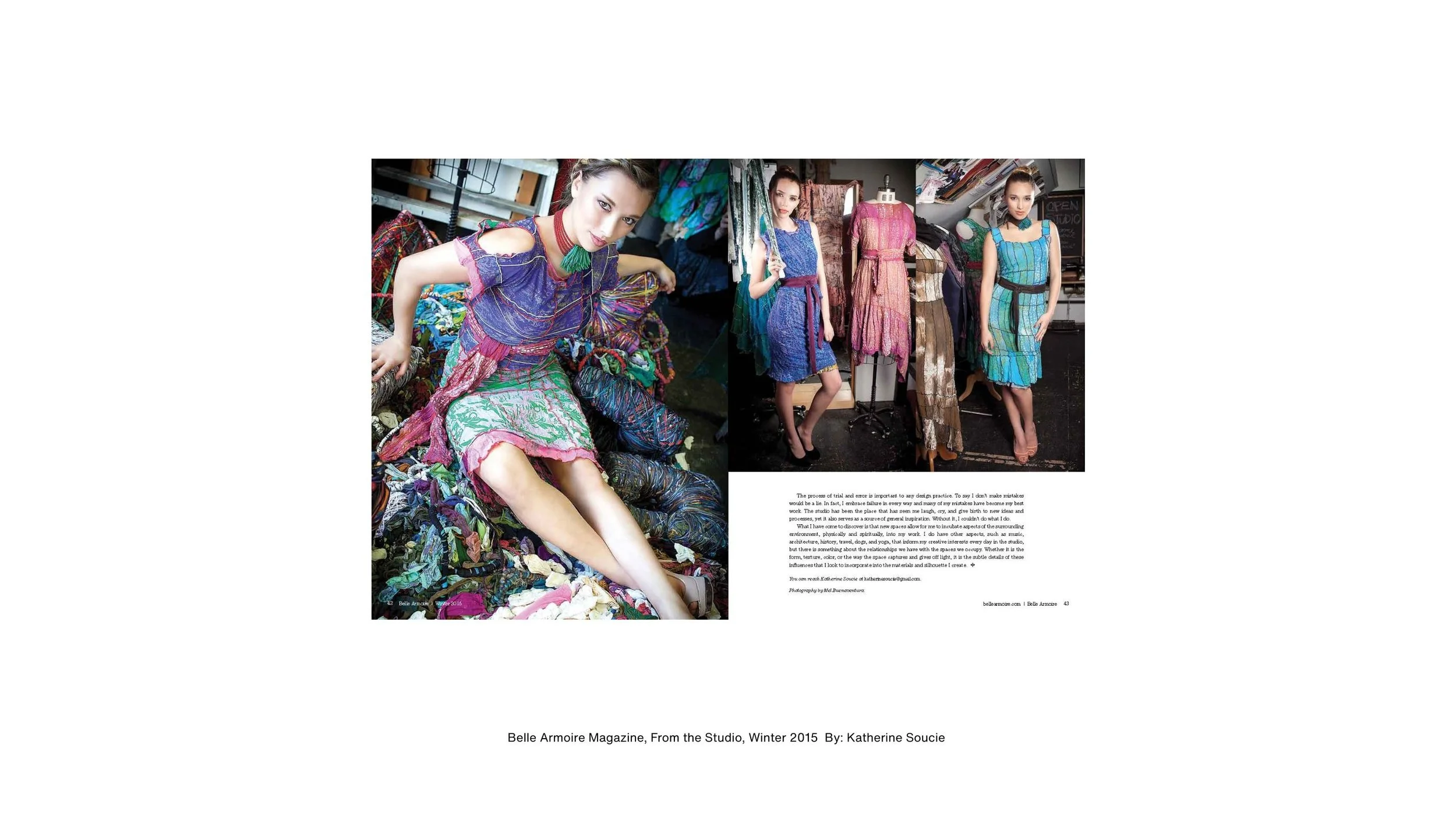
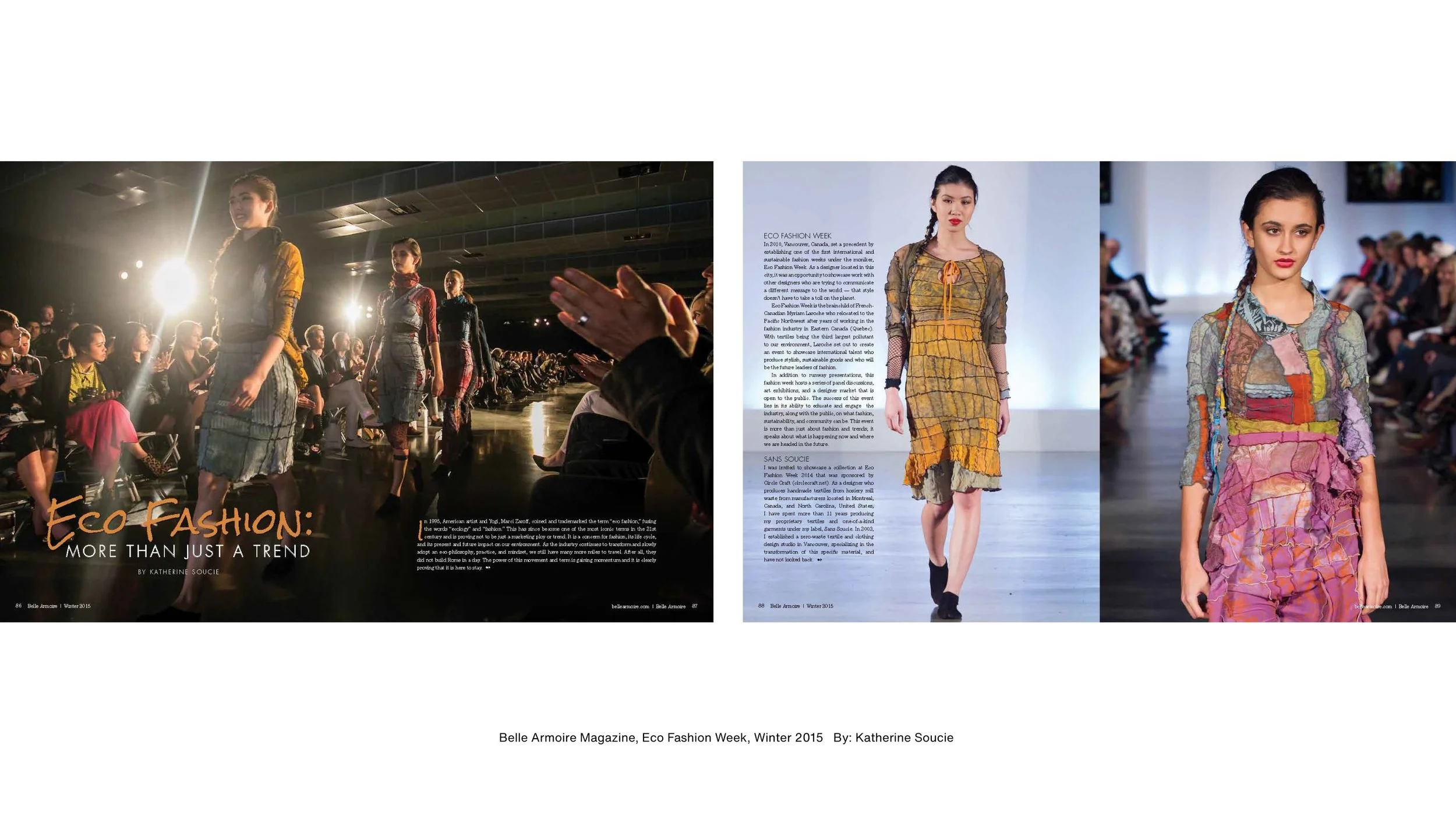
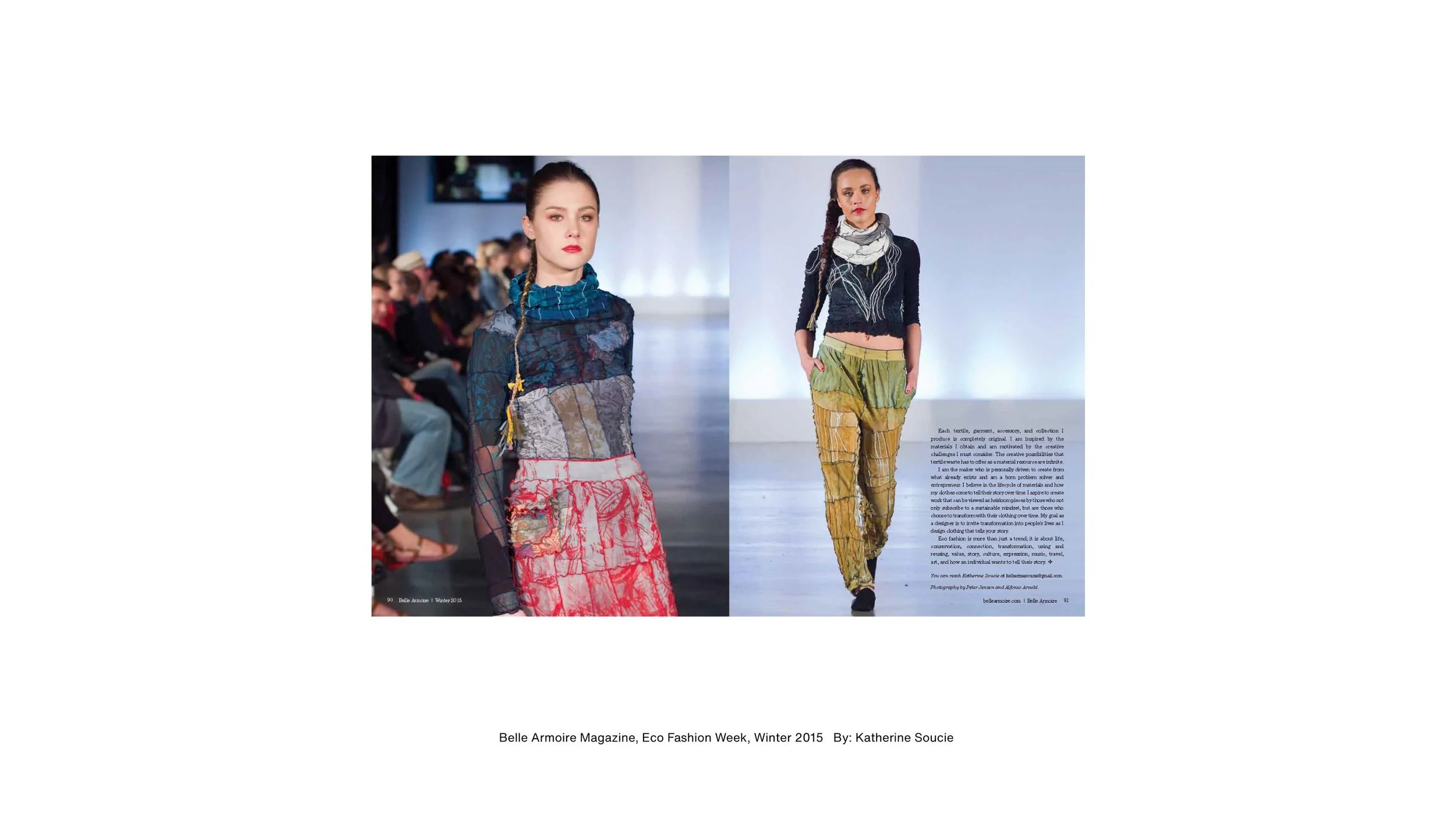
“Eco fashion is more than just a trend; it is a consciousness and concern for fashion, its life cycle, and its present and future impact on our environment.”
“My goal as a designer is to invite transformation into people’s lives as I design clothing that wants to tell your story over time.”
2014
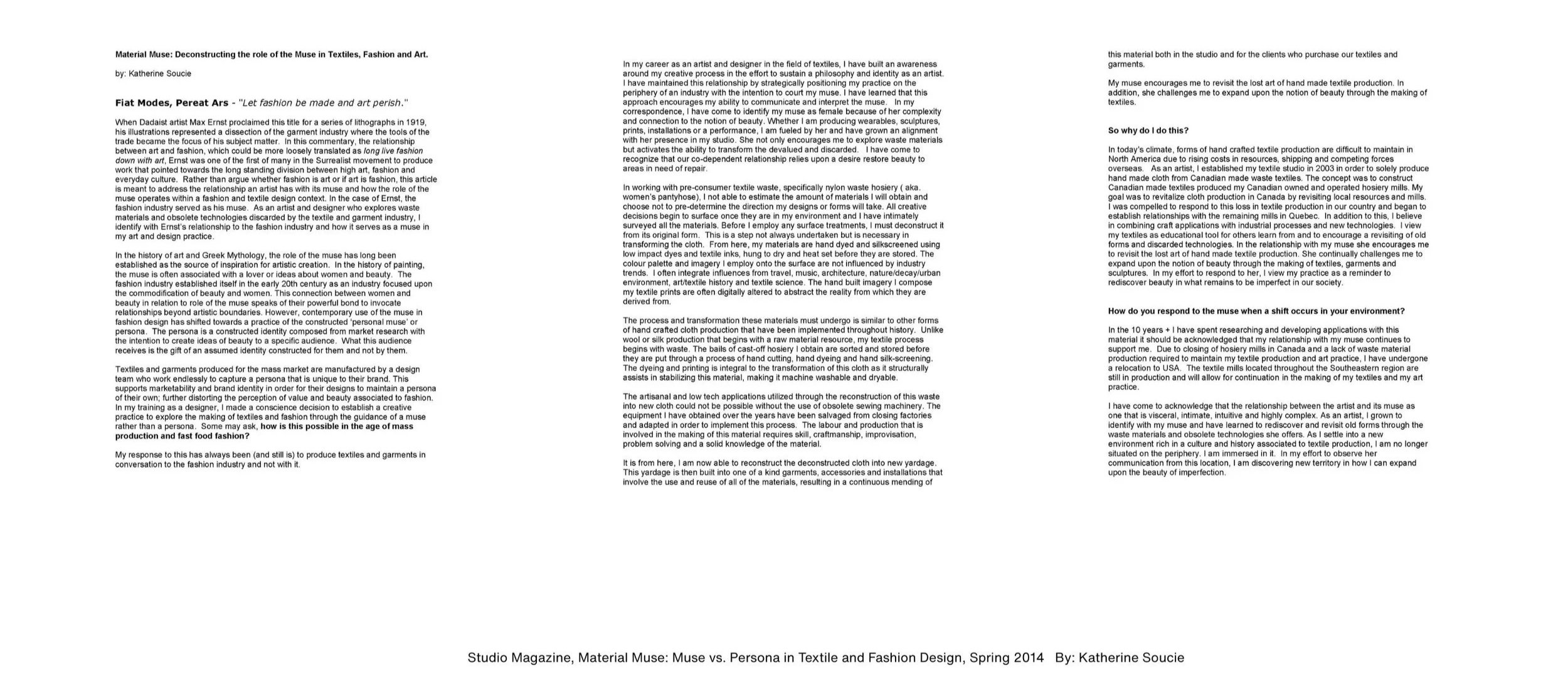
“In my training as a designer, I made a conscience decision to establish a creative practice to explore the making of textiles and fashion through the guidance of a muse rather than a persona. My response to this has always been (and still is) to produce textiles and garments in conversation to the fashion industry and not with it.”
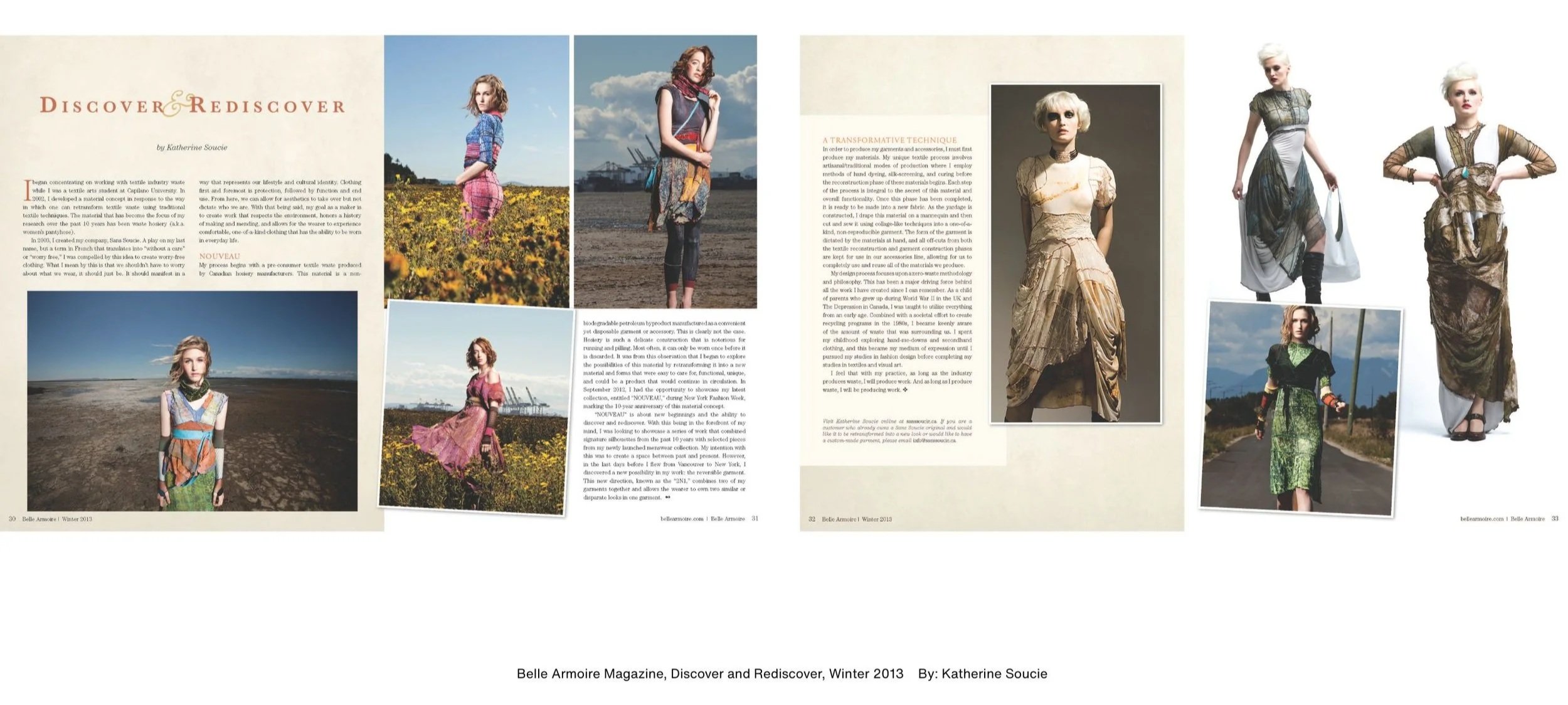
“Unlike wool or silk production that begins with a raw material resource, my textile process begins with waste. The labour and production that is involved in the re-making of these materials requires skill, craftmanship, improvisation, problem-solving and a solid knowledge of the material.”
2013
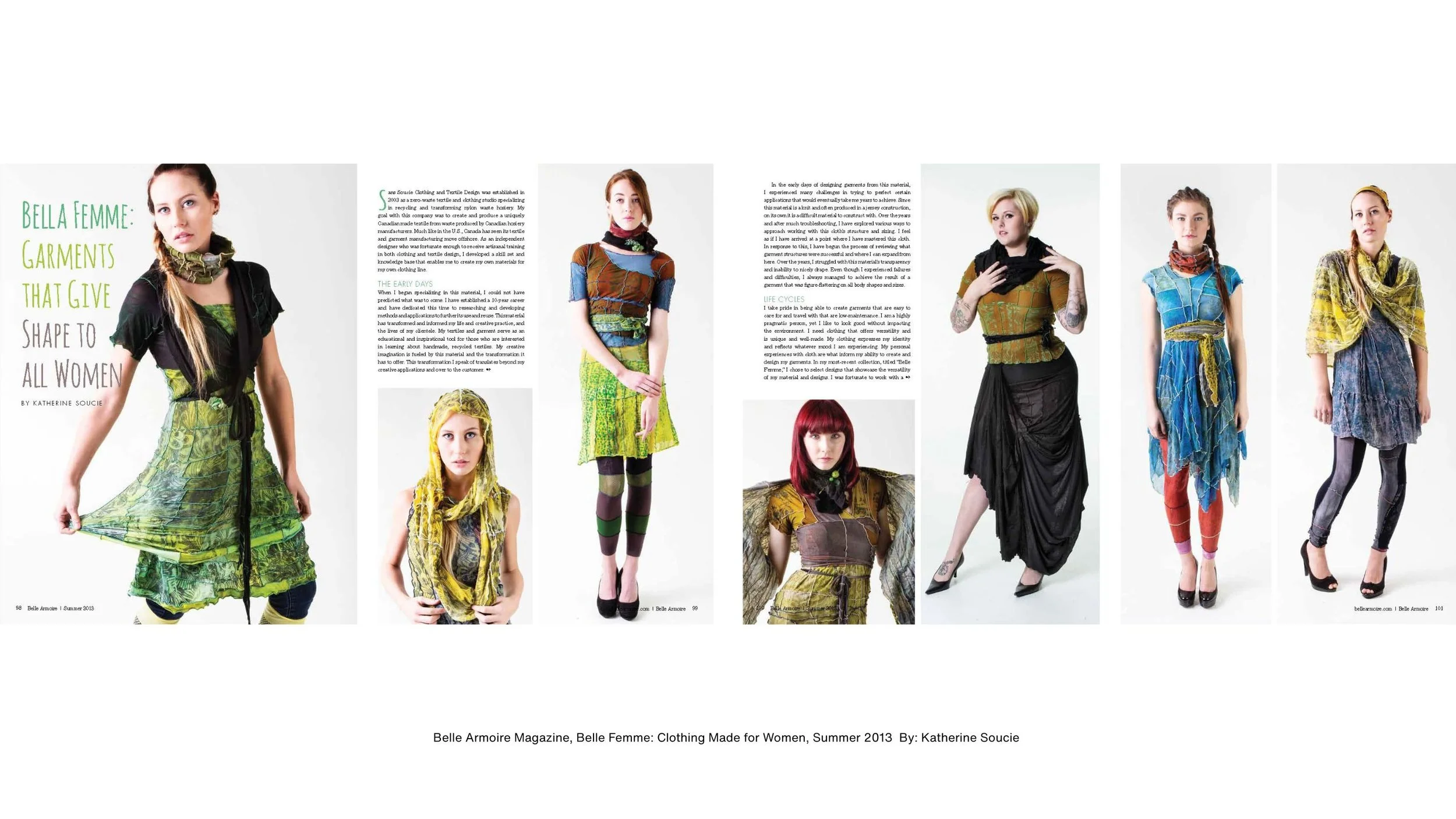
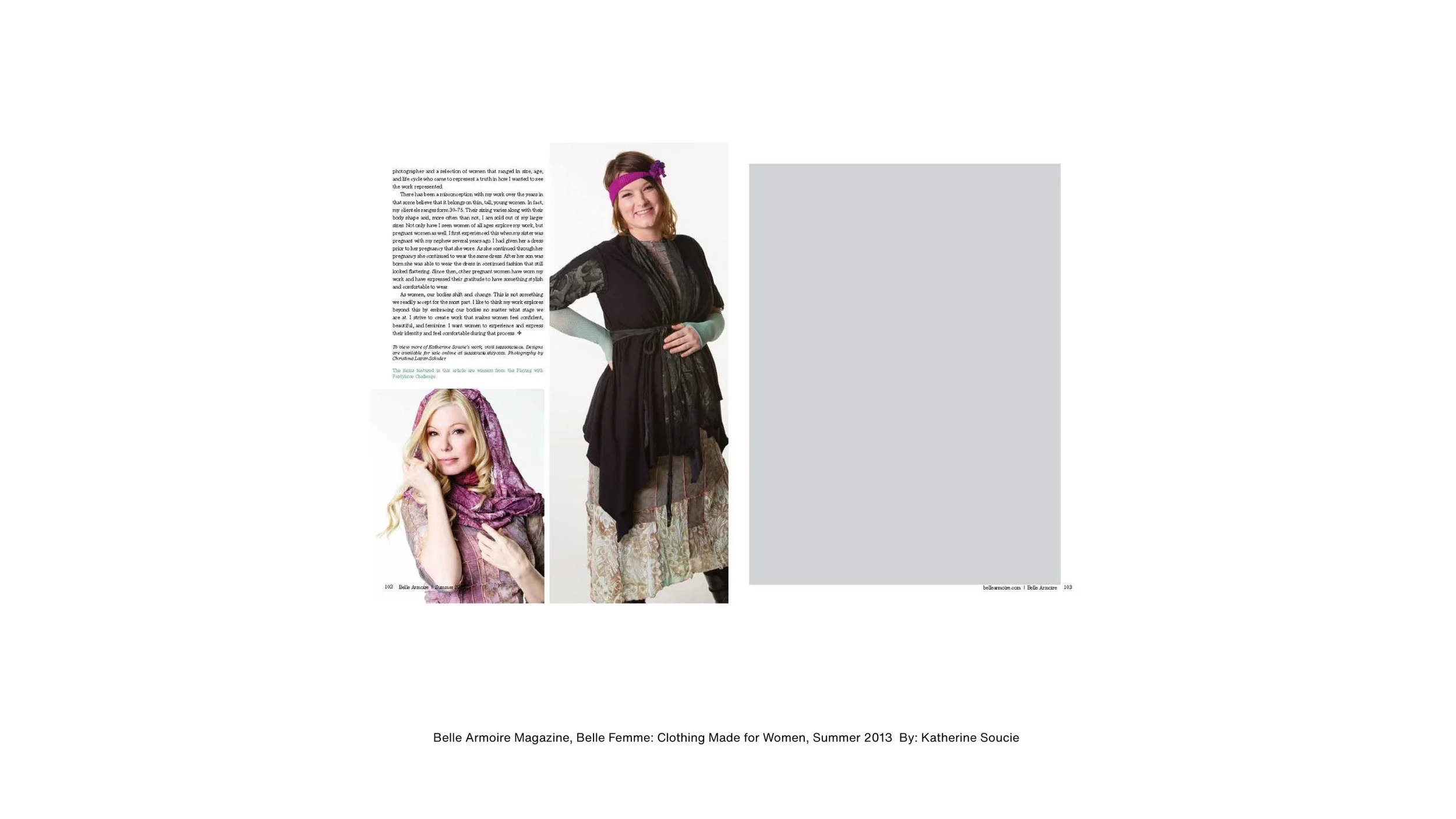
"This material has transformed and informed my life and creative practice, and the lives of my clientele."